how do you introduce yourself?

i-am

If you’re asked to introduce yourself, how do you begin?

Maybe with your name?  “Hello I’m Steve.”

Our name is the most natural representation of our identity. Since our earliest years it has defined us. Differentiated us from siblings, classmates, friends.

But how do you proceed then? After your name?

Maybe with your job role, or where you come from, or some details about your partner or family? What follows your name is probably context sensitive, but in many situations, when encouraged to say a little more, we might provide all of these details.

But does this describe who you are?

We seem more comfortable to offer up what we do, our employment, career, profession, job title, hobbies. We offer up where we come from, who else is in our lives, maybe our age… in other words our context.

Why do we find it more difficult to describe who we are as a human being?

I wonder if it is in part because that is more personal, more exposing, riskier? Maybe we are embarrassed to reveal our innermost selves? Possibly. But I wonder if it is more because many of us have been given little opportunity to explore and understand who we are?

What drives and motivates you? What do you value highly? What words, actions, behaviours give you a good feeling, and which have the opposite effect? What gifts do you possess? What do you believe to be true about the world, about your place in it – those unwritten rules that determine how you are judged, valued, belong? What excites you in life? What will your legacy to the world be?

Maybe it’s time to start understanding yourself?
Then you can introduce yourself.
Then people can truly meet you.
And you them.

why why?

Germany's Irina Mikitenko runs on her way to winning the women's London Marathon in London

The question ‘Why?’ is one we are familiar with.

We use it to seek understanding, context, reasons.

But an alternative viewpoint might be that it is the most unhelpful question.

‘Why?’ encourages us to repeat the story we have always told ourselves and told others. To tell ourselves, and others, the same untruth. To give ourselves and others permission, justification. That justification in effect a cloak. A cloak to deeper understanding, to enquiry, to learning, to change.

‘Why?’ becomes an (unintended) excuse.  ‘Why?’ effectively keeps us running on the same track; because we tell ourselves why we always have, why we are now, and why we always need to.

So maybe stop providing yourself and others with the excuse.  Ask instead ‘what?’, ‘when?’, ‘how?’, ‘where?’.  These questions explore specifics, they explore truth, they facilitate growth and movement.  They illuminate choice and perspective, instead of justification to remain stuck.

how do you know about pass the parcel?

image

I wonder sometimes if life is like a game of pass the parcel?

The music starts. Life runs.

The parcel moves around the circle.

In the party game, the parcel moves from child to child. In life though, maybe we are handing off one life moment to the next life moment? Passing our life to ourselves, experience by experience? That same self sitting next to us in the circle, about to live our next life episode?

In the game, the music stops. The anticipation of a gift, palpable. The joy of revealing it, effervescent. The pleasure of tasting the ‘sweetie’ within, satisfying. Feeling like you’ve won. Our child eagerly tears off the wrapper. Desperate to discover what lies within.

In the game of life, as an adult, we are however too keen to move on to the next scene, the next task, the next phase. We essentially restart the music immediately. No time to reflect on our personal learning. No time to even notice if we had any learning. No curiosity about the ‘sweetie’; that insight into ourselves. Move on. Pass the parcel of life to your adjacent, same self.

If we viewed life as a game of pass the parcel, where we stopped the music and enjoyed the self learning, the insight into how we’re growing as a human being, who we are, who we are becoming, where we’re going; how much richer would we be?

What if you don’t know about pass the parcel? What if you have never explored yourself, how you tick, how you come to the world, how you are evolving, your gifts, why you are here…? What if you just pass the parcel of life on to your same self neighbour? What if the music keeps playing?

Start now.
Play the game.
Tear open the gifts.
Learn to learn.
Learn to grow.

The game never ends.
The learning never stops.
Until the music does.

do onions really smell?

image

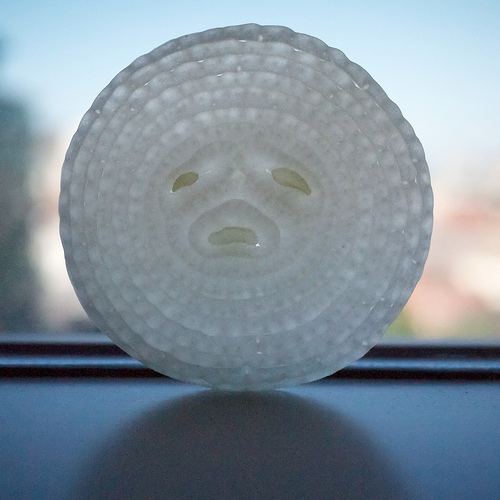
“Ogres are like onions.”

In the movie Shrek, the ogre is walking with Donkey through a field. Shrek is trying to describe his complexity. “Ogres have layers” he continues. Donkey doesn’t get it and wonders if Ogres are like cakes, because they have layers too and more people like cake. It’s an amusing, but deeply human moment. The analogy of a simple vegetable revealing real human depth, in an ogre. But as in many of today’s great children’s animations, there are messages, metaphors, analogies for the adults.

And… we are all like onions.

Layers of complexity. People we meet will see the outer layer. Those who look deeper may see what lies in the next layer down, or even the one beneath. If we pay attention to people and really take the time to notice, we can all see layers of their complexity and a depth of ‘human being’ in those we meet. We can never see it all though – even in those we are closest to.

We, in turn, may let friends, and those close to us in. Sometimes sufficiently to see the three, four, five layers beneath the outer layers, but there may be a core we don’t let anyone in to see. We may not even know ourselves what lies at the heart of our humanity, our self, our soul. What we are really made of, capable of.

Experiences can reveal our own layers to us. Sometimes difficult experiences, moments of conflict, moments of pain, moments of personal challenge. These can reveal deeper truths to us, but only if we take the time to notice. Only if we are resourceful enough in the moment to learn. And often we are not.

We need to be curious about ourselves, take time to notice, be compassionate with ourselves, learn to reflect, give ourselves time. And we need to recognise the times when we are avoiding the difficult learning, by telling ourselves that well trodden story we have always told ourselves. We need to look for our true truth. Learn to learn. About ourselves.

An onion flavours our cooking.

Your layers flavour you.

emotional replenishment

emotions shopping

I need to shop for food today. Saturday isn’t a normal shopping day for us – too many people in the aisles. The aimless people.

Anyhow, it occurred to me, what if I could shop for emotions? What would be on my list? What do I want more of and what do I have enough of in the cupboard?

Do I want more joy? More caring? More trust? More serenity? Do I need a little more sadness? A big pot of empathy? Do I need to refill my anger? Maybe I would like to take some lonely back to the shop?

Am I baking a relationship cake and need some extra courage? Some more selfishness, a little daring, some strong, rather than medium, fun? A big box of compassion perhaps, a soupcon of adventurousness and a large tin of hurt? Plus a garnish of warmth?

Maybe I’m about to change role and I need to stock up on thrilled, thoughtful and excited, buy a refill pack of embarrassed, but also purchase some ashamed and not good enough seasoning?

Or maybe I’m being forced to change role and need some hope, a little vindictiveness and a splash of inadequate, to go with the large supply I have at home of feeling used?

What would be on your emotions shopping list?

finding our place on the continuum

the continuum

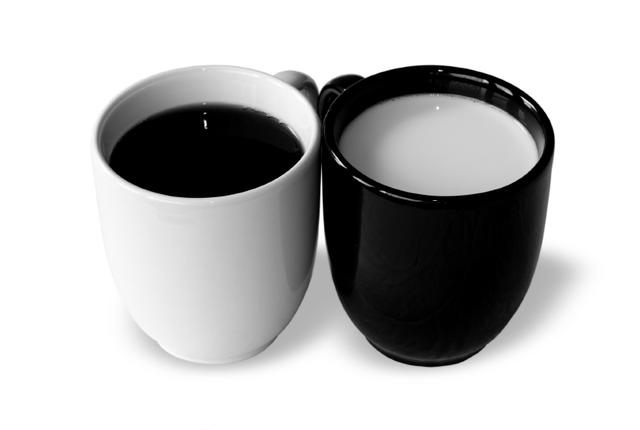
We live in a world of the spectrum and the continuum. Imaginary lines which mark out extremes and signpost all the places in between. Not black, not white, but a shade of grey.

I wrote yesterday about water – the oxymoron of the life giving, life taker. Many paradigms exist in our daily lives where the extremes, the opposite ends, can be deemed good or bad, positive or negative, healthy or unhealthy. The continuum between those extremes is often full of more choice that the water scenario, where nature determines the extremes and when to apply them.

Our diet for example. Eating too much of one thing can often be harmful. Eating too little of some things equally harmful. Smoking, alcohol and drugs – all forms of relaxation, pain relief or important habits of social bonding. Too much though can prove addictive, destructive or even fatal. Being with others, essential to our very humanness, yet sometimes we all need to be alone. Too much loneliness, psychologically painful. Mental pressure; a deadline or tense situation can provide drive, adrenaline, focus. Too much pressure can lead to stress, illness, breakdown, even death. Exercise and rest – too much of either, or not enough of either, potentially unhealthy.

Maybe we should name each continuum? To give it the full context?

Sociable aloneness.
Overindulgent abstinence.
Relaxed pressure.
Doing being.
Resting exercise.
Working life.

When water destroys, we often have no choice. But in many of our life tensions, on one continuum or another, we do have choice.

Finding our balance. Locating our place on each continuum. Choosing, then reflecting and reviewing, and choosing again is crucial to living a healthy fulfilled life.

I wonder though if all too often we don’t see the continuum? And so we cannot understand its nature, its extremes? Without this context, maybe we don’t really understand the choices we make or don’t?