learning from the man crèche

image

Waiting for a train, reading a notice board on the platform. It’s a real curiosity generator.

It seems, just within a mile or two of this platform, I can join a talk on the Inter City story hosted by the local Railway Correspondence and Travel Society. Who knew such things existed, or that experts travelled to tell the story of the creation of this brand?

I can donate £5 to buy a brick to help extend the local primary school – perhaps a reflection of the slow decay of government as the inexorable demands for funding grow in all quarters and increasingly cannot be met?

I can get my bike serviced with options ranging from a ‘tune up’, through a ‘full monty’, to a ‘strip and rebuild’ – there was a time a full monty might have been all in, but now a strip costs more.

I can join a debate on Georgian Kitchens and Cookery, hosted by the Local History Society – is that a debating topic? I’m not sure I’d have much to argue?

But the notice that most intrigues me is the Man Crèche.

The term crèche might normally be equated with children and I love this notion that one exists for fully grown men. The poster asks, “Is he getting under your feet?” It goes on to suggest, “Leave him with us. We’ll look after him.” Apparently, “All he needs is his pocket money.”  There are poker nights, curry nights and, most intriguingly, a pie night which incorporates a gravy boat challenge. I’m hooked by the gravy boat challenge. Games for men. Opportunities for men to play with men. How fabulous.

Ideas that shake up norms. That challenge our thinking, question convention. These are useful. They generate new possibilities, new thinking, new learning for us.

Taking a word like crèche and juxtaposing it with another people group. Juxtapolicious!

 

time to turn around?

image

There’s a lane near us that often closes due to flooding.  It’s a nuisance, but when it’s shut we have to drive around to get to our destination.  There are several alternatives, but each is a longer route.

We just do it though. We don’t go back home and say, “Oh well, no going to the shops today.” Nor do we drive down the lane and stop at the point where the water has risen to a foot deep, park up, and say, “We’ll wait for the floodwater to subside.”

We don’t even think about it. We turn around and try a different route.

Today in a meeting, we got stuck. We set out to achieve something as a group and every suggestion fell on stoney ground, or everything we tried seemed to move us no closer to our objective. Yet we persevered. The mood in the room became flat. Frustration emerged. Disagreements rose up like unwanted nettles in the garden. It took us nearly an hour for someone to ask, “Why are we finding this so difficult?” This gave someone else the opportunity to say, “Let’s try something different.” So we did. Completely different. And we made progress.

Strange that when our route is blocked physically, we instinctively and immediately detour. Yet when our thinking is blocked, we bash on, stubbornly persisting with our thinking. Getting further stuck as emotions then bind us up like creepers around our feet.

Turn around. Go another way.


how little we really know

image

For all we know about the world, its solar systems, its solids and gases and liquids, its states and orbits and atmospheres, its stars and planets and moons. For all we know about the Earth, its rivers and mountains and continents, its seas and oceans and lakes, its cities and people and landscapes, its cultures and societies and languages… we know nothing.

Everyone has their own world, their own reality, their own truth. Created from their own experience. Made up of patterns and meaning and connections. Motivated by values, purpose and beliefs. Driven by feelings, emotions and thoughts. Held in pictures and sounds and senses. Motivated by ego, desire and love.

Every world unique.

We struggle to understand our own personal world, let alone that of our neighbour, our colleague, our friend, our human cousin.

We know nothing.

yesterday’s traditions today

mayday

It’s Bank Holiday weekend.

Strange how we hold on to these relics of a time gone by. These customs. These traditions. Long beyond their time in a sense.

Bank Holidays have been around in current form since the late 1800s and were all associated with important religious festivals and agricultural holidays before they were enacted into law by the Victorians.  So many go back even further. May Day only became an official bank holiday in 1971, but its roots as a holiday stretch back to pre-Christian pagan festivals, and the familiar rituals of crowning of the May Queen and dancing around the Maypole made it a popular seasonal celebration in medieval England.

So why do we keep traditions?

Sure we enjoy the day off, but we don’t bring the holiday into the present context; rather, we hang on to a relevance long gone.

It is like that too with our lives more broadly.  We hold on to behaviour and thinking rituals which often served us well as children.  No longer useful as adults, we keep them still; almost shackled to the tradition.

We do this with learning too. Learning skills and ways of being which suit one role, but still practicing them in others, such as later careers we may undertake, or even in parenting, or other life roles.

Strange our love of the past.


a bit worried about worry

image

I met a potential coaching client the other day, wanting to explore how they could spend less of their time in a worried state. The brief conversation led to me being curious about worrying. Its intent, patterns of behaviour, structure, purpose etc.

In pondering my own experience I notice that I don’t typically worry when I’m in a really good mood.  When things are joyous, happy, positive, worry seems to be absent?

The next thing I notice is that worry seems to be in two broad forms – imagining a future potential scenario or assessing a past one. I worry about something that might or might not happen, or I worry about what I’ve just done, or not done. This leads me to notice that worry seems to be neutral in some way – it shows no favoritism to good or bad, might or might not, did or didn’t.

Worry seems to be a state of disablement.  Worry, in a sense, stops me acting.  It occupies me … with worry.  I don’t know that worry achieves anything other than keeping us busy. I am reminded of this quote (attributed to a number of people)…

Worrying is like a rocking chair. It gives you something to do but it gets you nowhere.

I have also met people for whom worry becomes a state of existence. They develop beliefs about the need to worry in order to be themselves. Worrying develops a heightened state of challenge that delivers, it seems to them, a better result.

Curious that we worry.

That’s enough worrying about worry for now. Time to just be.


spoiling the view

bird mess

I look out of the window near my desk on occasion to help me think.

A bird has ‘bombed’ the window .  A serious amount.

It’s been distracting me all day.  Causing me to focus not on the view outside, but instead drawing my attention to the window pane.  Somehow making me look near, rather than far. Obstructing my thinking.

I’m sure there’s a metaphor in there somewhere!

what is the value of a thought?

deep in thought

What purpose does a thought serve?

They seem sometimes merely to generate new thoughts, which in turn father more and yet more.

They seem to occupy us. Keep us busy. Deflect us from our experience in the moment.

They seem to be our ticket to our claim of species superiority. World domination. Although recent world events and the erosion of the planet’s resources might argue otherwise.

They seem to be the root of judgement.  Judgement of others. Judgement of ourselves.

They seem to be the foundation of our communication. The exchange of ideas and knowledge with fellow thinkers. Yet two things seem to be true here; firstly, whilst we exchange thoughts we are often distracted from, and dismissive of, our own feelings. The thoughts, and their exchange with other thoughts from other thinkers, perhaps a distraction from an unspoken truth about how we feel. Secondly, our thinking stops us listening.  We are so busy marshalling our own thoughts we don’t really hear the thoughts of those we are supposedly communicating with.

Yet, thoughts seem to be the catalyst for our learning. Generating new awareness, new understanding, new skills.

So I wonder… is the value of a thought always clear?
Is the value worth the cost?
It seems to me… sometimes, but equally sometimes not.

image by: Lisette Wennström

denuding me

image

Much in our lives is seemingly over engineered.

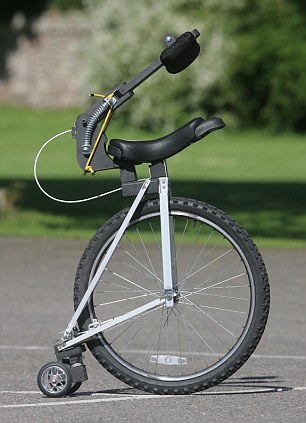
This is the ‘Velofeet’, a unicycle with stabilisers that the rider sits astride and walks. Yes, a sitting walking device.

I have a new electric toothbrush which throbs to tell me when to move to another part of my mouth and has a light which flashes should I press too hard. There are forks that do something similar if you eat too much, too quickly!

I saw an article the other week about a toilet that is internet enabled, so that you can raise or lower the seat using an app on your phone before you arrive at the bathroom.

There’s a ‘smart mug’ with a sophisticated temperature and light system to tell you whether your drink is still warm or is too hot to drink.

Don’t get me wrong, technology is a remarkable thing. I still marvel at the ‘magic’ that is… my microwave oven.

But this kind of technology led innovation, trumping any consumer led need is a growing phenomenon. Over engineering products, because we can.

It denudes us of our human reflection, thinking, judgement and decision making.

My toothbrush makes me lazy. It stops me thinking. I start to rely on the light and the throb, rather than thinking about what I’m doing. Personally, I’ve had this issue with SatNav for a while. I stop noticing. I become blind to my route, landmarks, orientations, distances. I stop seeing what is around me and instead become a slave to a voice, or a picture, telling me to turn now. The result being I have no learning. I don’t learn how to get somewhere, I just learn to rely on the technology.

This stripping away of the natural use of our senses, diluting our reading of the signs, removing our need to think, taking control of our judgement and decision making, denying us learning, is impacting our interaction with each other too.

Bit by bit we become less human.


meta to the meta

image

Meta tags appear on web pages. They aren’t visible to the reader, they contain data describing the page. Data on the data, if you will. ‘Meta’ can also be described as a concept which is itself an abstraction from another concept.

Going ‘meta’ to a situation can also be a self referential place; stepping outside of oneself to observe oneself.

An example might be to ask “What do I think about my thinking?” Or perhaps to explore, “How do you reflect on those reflections about that?”

Sometimes, creating a different physical perspective can help still further. Try this out…

Sit and think about a problem or issue you are currently grappling with. Notice what you’re thinking and feeling as you explore this difficulty.

Now, get up and stand across the room, looking at the original chair or place you were just in. Here you are no longer thinking about the original problem, instead you are considering the thinking about the problem.

Ask yourself “What do I notice about that thinking?”  Ask yourself “What do I think and feel about that thinking and what do I hear in that thinking?”

Notice what comes to mind. Perhaps you think the thinking was a little negative or judgemental? Maybe you notice uncertainty or confusion? Maybe you notice more than one perspective in the thinking – like an internal dialogue? Notice whatever comes to mind?

Now, stand in a third place; another part of the room, still further from the original chair. This time look at the place where you were standing a few moments ago; the second, reflective place. From this new third place, ask yourself “what do I notice, what do I think, how do I feel about that thinking in that place?” The thinking about the thinking, if you will.

Here you may find new insights. New meaning. New significance. New awareness on the original issue… as you go meta to the meta.


mindless thinking?

image

The mind’s job is to validate what it already thinks

Byron Katie

Sometimes we fool ourselves into thinking we are thinking. That we are using our higher cognitive capabilities to make choices, rationalise, decide. To use our intellect.

Our minds are perhaps the best pattern forming device we know. So once a pattern is there, we usually lose the ability to think around it. Instead our brain tells us what it believes it already knows. It post rationalises so as to prove its pattern is correct.

Something to think about?