they’re your rules, believe it or not

truth

We all have beliefs.

I’m not referring here to spiritual, religious beliefs. I refer instead to the invisible beliefs we hold about the world, about who we are and about what we are capable of.

I’m referring to the truths we hold, sometimes consciously, but mostly out of consciousness, such as “I can’t sing”, or “I’m not beautiful”, or “People are amazing” or “If I set my mind to it, I can achieve anything”, or “I’m stupid”, or “Working hard brings rewards”.

Such beliefs are typically generalisations, typically unconscious patterns, meta to our experience. They can be enabling, or they can be limiting. They act as a post-hypnotic suggestion and they direct future behaviour to confirm them.  They provide context, meaning, causation, structure and as such are irrefutable.  We will deny their inaccuracy, even in the face of cognitive evidence. They are in effect our own personal rules of the world.

Take “Working hard brings rewards”. A generalisation, in that it assumes always. A generalisation in that it doesn’t define work, or how hard, or what rewards? But, someone believing this, will work hard, they will, in all likelihood, value the rewards that work brings and justify or explain those as being earned by the hard work. The ‘truth’ of the belief, or personal world rule, is both acted out now and assumed to be required in future – after all, its truth is without doubt, its cause and effect undeniable, its outcome inevitable – such is the nature of a belief.

Meanwhile, work that doesn’t bring rewards, or rewards unconnected with working hard, may be dismissed as of little note, or simply go unnoticed. The belief could be enabling, in that it provides motivation, the believer will doubtless work hard, will attain and will get rewards. It could also be limiting, in that the believer will probably give up leisure time, family time, time for self and may be pressured with a weight of reward earning responsibility, or may burn out over time.

So what do you believe?  Do you know?

How do your beliefs enable you and how do they limit you?
 

what exchange rate do you set?

rocklayers

Time is the coin of your life. It is the only coin you have, and only you can determine how it will be spent. Be careful lest you let other people spend it for you

Carl Sandberg

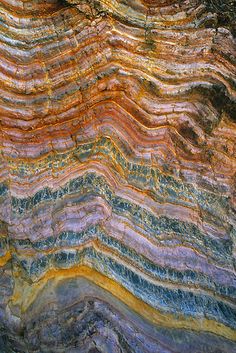
We lay down the layers of our life through the use of our time. Knowing how we want that to be and to be seen by others. Choosing the legacy we will leave. This matters.

working as a pear

image

When I was at school, I studied Latin. Only for a year as, despite getting an A in end of year tests, I was deemed a scientist. I therefore got to study Physics, Chemistry and Biology as separate subjects. French was my ‘permitted’ language.

Now, with the benefit of some life experience, I realise all these choices, mine or those made by the academic system, were all somewhat pointless. I haven’t really used any of this knowledge to any great degree.

The other day I was designing some training with a colleague. We were creating a storyboard with post it notes. She wrote ‘work as a pear’ on one. Instantly her face crumpled and tears of mirth welled in her eyes as she chortled over this ridiculous concept and silly spelling faux pas (French eh?). I began to snigger too. We enjoyed the moment. Together.

I wish at school I had been offered the subject ‘learning to laugh at myself’. This skill would have been much more useful. The ability to laugh at our mistakes. To laugh at our occasional ridiculousness. Hold our slip ups lightly. Know that everyone is human. Simply lighten the day with laughter and a smile. These are useful skills. De-stressing. Providing context. Perspective. Building togetherness, teamwork. Embracing human frailty. Knowing that we are all fallible yet all amazing.  Feeling good about yourself. Letting others see you, without fear. Building connection.

I recommend laughing at yourself several times each day. It’s good for the soul.

I use it more than any chemistry, physics, biology, Latin or French.


finding our place on the continuum

the continuum

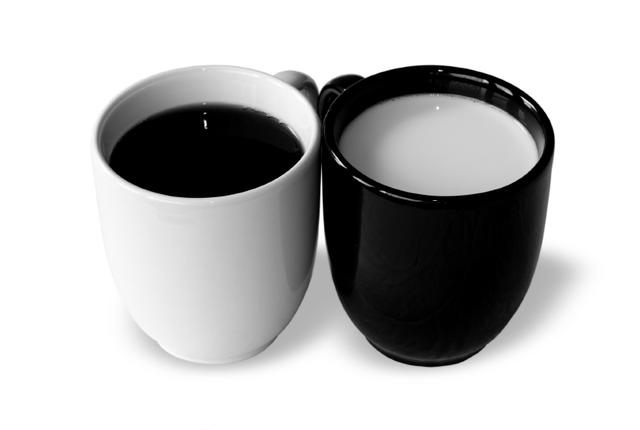
We live in a world of the spectrum and the continuum. Imaginary lines which mark out extremes and signpost all the places in between. Not black, not white, but a shade of grey.

I wrote yesterday about water – the oxymoron of the life giving, life taker. Many paradigms exist in our daily lives where the extremes, the opposite ends, can be deemed good or bad, positive or negative, healthy or unhealthy. The continuum between those extremes is often full of more choice that the water scenario, where nature determines the extremes and when to apply them.

Our diet for example. Eating too much of one thing can often be harmful. Eating too little of some things equally harmful. Smoking, alcohol and drugs – all forms of relaxation, pain relief or important habits of social bonding. Too much though can prove addictive, destructive or even fatal. Being with others, essential to our very humanness, yet sometimes we all need to be alone. Too much loneliness, psychologically painful. Mental pressure; a deadline or tense situation can provide drive, adrenaline, focus. Too much pressure can lead to stress, illness, breakdown, even death. Exercise and rest – too much of either, or not enough of either, potentially unhealthy.

Maybe we should name each continuum? To give it the full context?

Sociable aloneness.
Overindulgent abstinence.
Relaxed pressure.
Doing being.
Resting exercise.
Working life.

When water destroys, we often have no choice. But in many of our life tensions, on one continuum or another, we do have choice.

Finding our balance. Locating our place on each continuum. Choosing, then reflecting and reviewing, and choosing again is crucial to living a healthy fulfilled life.

I wonder though if all too often we don’t see the continuum? And so we cannot understand its nature, its extremes? Without this context, maybe we don’t really understand the choices we make or don’t?

when French toast trumps oatmeal…

image

If you watch The Big Bang Theory, you will know about Sheldon’s breakfast routine. For anyone who doesn’t, Sheldon, the main character, has a set breakfast on each day of the week. It’s an occasionally recurring comic theme. In one episode, Penny, a neighbour, is over in his flat cooking French toast for breakfast. Sheldon points out that Monday is oatmeal day. At the end of the scene Sheldon throws the French toast in the bin, remarking “smells good, what a shame it’s Monday”.

Today is New Year’s Day. Happy New Year.

I have just been out. I passed a large number of people walking, in groups. It seems customary that we go for a walk on this day, either to visit friends or relatives, or maybe just to walk off the Christmas excess.

In a few days it will be Monday, and for many of us we will return to work. That’s the routine. Work during the week, weekend off – for most of us anyhow.

Does it ever strike you as strange how we structure our activity around the structure of the day, week or even the year?

Why do we walk on this day, not on the 4th or the 19th or March the 8th? Because this is New Year’s Day, and custom says we have it as holiday and we walk.

Why do we start work on Monday? Because that’s what we seem to have set up as the norm. Sunday, the day of rest. Handed down from religious belief over centuries.

I notice at work how it has become quite commonplace for people to work from home on a Friday. An emerging time bounded custom or practice.

How much is our activity, our freedom, our choice governed by routine, custom and historic ritual structure I wonder?

We largely get up at the same time, maybe retire to bed at the same time. Eats meals to a schedule. Do things on certain days, at certain times. This is fine if that works for us, but I wonder how much of this is without conscious thought? Just a pattern, a ritual. How much is driven by societal conformity, by organisational rhythm, by peer expectation?

Maybe we should more consciously choose what we do and when? Do what we want or need, right now? Do what makes us happy in the moment?

It doesn’t have to be oatmeal Monday. You can have French toast, just because you feel like it and it smells good.

Happy New Year everyone.

do you choose awesome?

image

I saw a diary on someone’s desk today.

I know, a paper diary … no doubt some of you will be shocked and some of the younger readers confused at this somewhat outdated concept. But I looked past this tokenism of a bygone paper age, because what was displayed on the front cover caught my attention.

It simply said…

Wake up
Be awesome
Repeat x 365

Lovely philosophy.

constrained by knowing

image

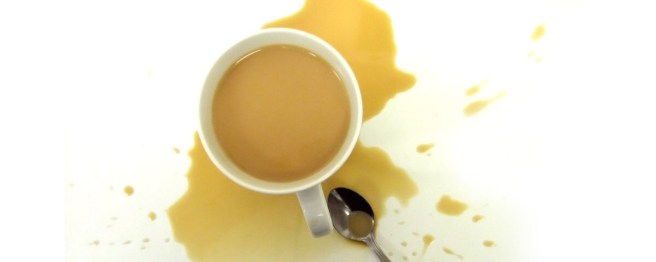
If I asked you to draw a picture. A picture which portrayed the act of making tea. The intent being to communicate the process. What would you draw?

You might depict a kettle boiling. You might draw a teapot. Water pouring into the teapot. You might sketch a teabag or you might show a tea strainer. Maybe a cup and saucer, or a mug. You might have a jug of milk, or a bowl of sugar. Maybe even a biscuit being dunked?

But would you draw tea plants being dunked in hot bubbling geysers? Would you show a cocktail shaker being vigorously oscillated with its tea and water contents?  Would the teabag be shaped like a rubber ring stretched over the cup so that the water could pour through, into the cup? Probably not.

Now it might well be that the tea making process has been honed. Improved beyond improvement. Maybe the teabag or the teapot and strainer are supremely efficient and effective. Maybe putting the tea into the water is the most practical method, rather than pouring the water slowly through the tea? But we probably thought we had it all worked out, for many centuries before the teabag was invented. Now we have at least three shapes of bag in the world.

Day to day, in everyday ways, we are constrained in our thinking by our knowledge. By historical experience. By custom. It makes us lazy. Deprives us of imagination and true creativity. Diminishes our ability to think divergently. It denies us new choice.

What are you doing right now, which you simply take for granted?

It is the way it has always been.

Instead, learn to unlearn. Learn to experiment. Especially in the way you live. The way you come to the world. The way you are.

Try breaking away from the constraints of what you know.

Maybe not knowing, will grant you a new freedom?


would you step through?

image

If there was a doorway. And through that doorway was a world where something you desire, was true. Would you step through?

What if you knew you would never be able to come back? There was a risk you would lose some things you currently have. A chance they would be absent, or different, on the other side. There would be many unknowns, through the door.

But the promise of something you long for too. A deep longing.

Would you step through the door? Would you take the risk? The chance to gain a deep desire, but with the risk of losing some things you value on this side? Would you take a chance? Would the excitement of the possibility draw you in? Would the call of the longing be too great to resist? Or would the potential loss, the fear of the unknown keep you this side?

The red pill or the blue pill?

A fabricated reality or the reality of truth?

Which is which side?

Risk or safety? Unknown or known? Heart or head?

Would you step through?


do you see yourself in your thoughts?

tranquil thoughts
Our lives are a reflection of our thoughts.

Nurture calm, tranquil, compassionate thoughts for yourself and others, and your life will reflect the peace that comes with those thoughts.

Draw your attention instead to the busy circumstances of a modern world, with all its urgency and expectation, then you can be drawn into a whirlpool of haste, a cacophony of noise, a blur of striving from which peace is hard to find.

Think about the life you want. Live the life you think.

are you sure you want to read this?

are you sure reflection
The “Are you sure?” button can be annoying.

You’ve done your preparation, made your decision and having pressed ‘send’ or ‘ok’, ‘cancel’ or ‘order’ the screen provides another pop-up asking the “Are you sure?” question.

Grrr.

This week I have had to cancel a holiday. Flights, hotels the lot. Each step I have been asked the “are you sure?” prompt. It has given me a moment to honour the importance of reflection, to honour a sadness, but also to honour the decision, other values that matter to me, people that matter to me.

I wonder, what if that button existed within us? What if when we were feeling fed up, the “are you sure?” prompt encouraged us to check in, calibrate and consider what is good in our lives?

What if when we were about to be overtaken by anger, the “are you sure?” prompt offered us the opportunity to pause, breathe and get some perspective?

What if when we were about to say something inappropriate in the midst of an argument, something that we might later regret, the “are you sure?” prompt held the words in the departure lounge of our minds and mouths, giving us a moment to re-think and consider the consequences?

What if when we felt a wave of emotion and our heads stepped in to prevent that showing to the outside world, the “are you sure?” prompt gave us the chance to be? The chance to show vulnerability and our truth? To be real?

Last week I might have signed a petition to ban the concept of “are you sure?” but now I’m asking myself “are you sure?”