the hidden art of hiding

hiding dyslexia
In recent months I have spoken to a number of people with dyslexia.

One common aspect of our conversations has intrigued me. The tension that is created between a need for some support, balanced with a desire not to be marked out as different. I want some help, but I don’t want to be seen to want help.

Those I have spoken to have talked of their shame. A sense that in some way they are inadequate. Unable to do things that others find straightforward. Many hide their dyslexia for this reason. Preferring to find their own coping mechanisms. Choosing roles and work where the challenges arising from their dyslexia aren’t exposed.

Whilst my dyslexic confidants have shared their fear of judgement, their desire to hide their ‘condition’, they have also shared heart wrenching stories of the efforts required to cope. To stay afloat. Many are desperate for some simple supports.

The reality here of course is that these dyslexic individuals have other strengths, other capabilities which are more developed and stronger than their non-dyslexic colleagues. Just as with any human being, we are all different. All unique.

We all hide too.

Sometimes we hide a part of ourselves from those around us. Often we hide a part of ourselves from ourselves. Yet we think that the hiding is hidden.

Honesty and truth seldom bring blame, judgement, criticism. When they do, it is those criticising, judging, blaming who are the individuals who are really hiding. Hiding behind judgement, criticism and blame.

We need to come out of the shadows.
To learn to be, in all our unique glory.
To stop hiding.

image by: Sally Green


let’s see what the pain looks like

synaesthesia

Someone once uttered those words to me.

‘Let’s see what the pain looks like’.

The context was around an organisational change. I remember at the time being momentarily confused. Don’t you feel pain? I don’t know what it looks like, any more than I can taste it or hear it.

On reflection I realised it was an interesting insight to the speaker’s inner world. I regretted the missed opportunity of exploring with them what pain looked like for them. Did it have a colour? A hue? Was it a picture, a particular image, a personal memory? Was it sharp, blurred? Was it a still image, a movie? Was it 2D or 3D?

Beyond the curiosity about their representation, I wondered what had led them to see, rather than feel, pain. Was it that feeling it made it too real? Was it a defence mechanism, to stay a little removed and observe the pain rather than taking it into the body? Was it safer? Were other feelings also seen? Did they feel anything and, if so, what was ‘feelable’ and what wasn’t?

Was this only related to pain and other feelings or did they ‘see’ everything? Could they see smells or see tastes too? Did they see freshly mown grass when the smell wafted into their nostrils? Did they see musical notes as they listened or played? Did they have other synaesthesia, such as hearing smells, tasting sounds or smelling images?

A missed opportunity, but one that still serves as a learning, one that stays with me as a curiosity about the uniqueness of our human experience.


when we would do well to be the beach

What is is

When you go to the beach, you walk on the pebbles. You see some pebbles are rounded, polished, worn smooth in the rub of nature. You see some are sharp, jagged, fractured in the storm of collision. Some pebbles carry history in fossilised form. Some are small. Some large. Some brown. Some grey. Some multicoloured. And you observe this and you allow it.

When you go to the beach, you see the sea. Water crashes in foam, surging for freedom. Water retreats in liquid fellowship. Foams, retreats, foams, retreats, foams, retreats in enduring rhythm. And you see this and you understand. And you accept the way that it is.

And in all of this, you don’t get emotional about it. You appreciate the beach. The pebbles. The sea.

What is, is.

But when you meet other human beings, you lose all that.
You say “he’s too this” and “I’m too that”.
You say “if only she wasn’t…” and “I should be…”.
You say “They are different” and “I am not enough”.

Judgement comes in.

Maybe we should see people as the sea and the pebbles, and appreciate them as they are.

What is, is.

Inspired by Ram Dass


hold out your umbrella and act randomly

Random acts of kindness
It is world random acts of kindness day on November 13th. It seems as though we need a day for everything these days. Maybe we could try it without a special day?

There was a story the other week about two guys who spend their time topping up expired car park tickets using their own money. They spend £60 of their own money each week.

Doing something kind for someone makes you feel good.

But it seems there’s a science to it.

Scientists have long known that the hormone oxytocin plays essential physiological roles during birth and lactation with mother and baby bonding. Animal studies have shown that oxytocin can influence behavior too, prompting voles to cuddle up with their mates, for example, or to clean and comfort their pups. Now a raft of new research in humans suggests that oxytocin underlies the twin emotional pillars of civilized life, our capacity to feel empathy and trust.

I held my umbrella over someone’s head whilst the drizzle fell earlier today.
Random.
Kind, I thought.
Appreciated.

So give it a go. Don’t wait for the official day, do something randomly kind now. Get a shot of warmth. Hormonally dose up on your oxytocin.

who or what is twiddling the dimmer switch?

dim your power
I have been speaking these past two days about giving your power away. How it diminishes you and your potential.

So who or what have you handed control to?

Is it your boss? Or is it your partner, your spouse or your lover? Have you handed it to a parent or a sibling? Does fear have your power? Do you give it to controlling and domineering people? Have you handed it to another part of you? Maybe the ambitious part, maybe the parent in you, maybe to the part of you that fears being great?

Have you given it to comfort foods, alcohol, drugs or other forms of escape? Have you given it to taking care of everyone else? Or to the people you see as more worthy than you? Do you let people who are unhappy drain and suck your energy? Have you given your power away to money or time, the scarcity or lack of it?

Or have you given your power to a social institution such as the government, a religion or a philosophy? Or to someone in authority or a position of power, such as a doctor, a lawyer?

Take back control of your dimmer switch and turn yourself up bright.

fifty shades of green

shades
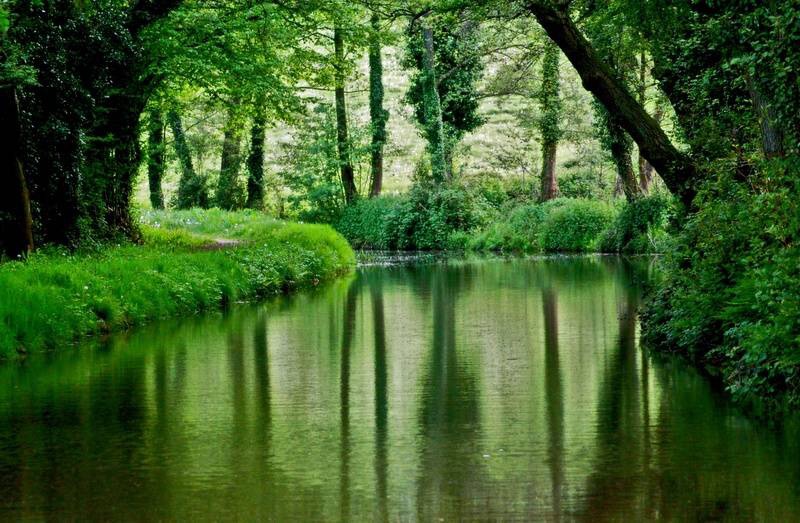
I’ve been lucky enough to spend time outside today, in the sunshine. I’ve been walking. In open space. Near a river. In nature. Exploring with likeminded people. Coaches.

Nature can teach us much. Many things we struggle with in our human existence have long ago been resolved by nature. By the elements, by other species, by animal and plant. We build buildings with sophisticated cooling systems for hot climates, whilst termites solved the problem long ago, without technology. A tree draws water sixty seventy feet up into its structure without a single pump.

Not only can nature offer us clues to solutions for practical challenges, engineering conundrums, it can also offer insight to our challenges of mind, of thought, of feeling. Challenges around our very being. Our humanity.

Walking today I noticed just how perspective changes as you take another view, turn around, move closer, move away. Useful tools for exploring our own stuckness.

It’s easy to think grass, trees, shrubs, leaves, plants are all green. But today I also noticed just how many shades of green there are. Many enhanced still further by light or shade playing on their surface.

There are shades for our human worlds too. Problems are never one shade. Opportunities are never one shade. Relationships never one shade. Our Performance never one shade. Never one shade of solution. Never one shade of right or wrong, good or bad.

We would do well to remember this. To see the shade in our lives and to get perspective.

If you’re struggling with that, maybe go outside? Walk. Look. Notice.

time to clean up?

human clean
Our lives are spent cleaning up.

At home for example, we’ve just had breakfast and we are headed out for the day. Each of us has showered, washed hair, groomed in our respective ways. We’ve cleaned up in the bathroom, to make space for the next visitor. We’ve washed up the breakfast crockery. Cleaned down work surfaces. Even washed the car windscreen for the drive ahead.

In our human lives we clean and tidy other things too, constantly – we seem compelled to keep order, space, a standard of existing, room to ‘be’. We tidy rooms, dust, vacuum. Clear garages. Windows are cleaned, inside and out, so that we can see the world more clearly. Cars get hosed and washed, waxed and polished. Gutters are cleared. Furniture gets realigned, wiped down. Gardens get tended. Old shoots are clipped away, grass mown and neatly edged. Leaves swept. Yards and paths are brushed and ‘broomed’. Toys are cleared up after use. Children’s faces wiped. Partially consumed foods are repackaged and stored, wrapped, clipped, boxed in a plastic container. All aspects of our selves and our homes kept clean and ready for re-use.

Our places of work are tidied too. Factory floors, office corridors, desks. Electronic storage is deleted, archived, filed away in folders. Physical storage too, books, articles, paper, reports. Each evening the cleaners arrive to ensure the place of work can function, efficiently, effectively the following day. Processes are run to ensure a state of commercial readiness. Billing, order processing, overnight processing schedules, backups and archives.

Even relationships get cleaned up. Apologies made. Gifts bought. Farewells said. Hugs offered. A good ‘let’s talk this through’ often used to clear things up for the next leg of the journey. Friends are remembered, some are forgotten. In social media we follow and unfollow, friend and unfriend to keep our electronic worlds clean and tidy for the next visit.

We are even learning to clean the planet.

But still the mess comes. More to tidy, more to clean.

Yet, there seems to be a focus on the exterior.

Our outside and the places it inhabits, works, moves to and through, all get attention. Our connections to others on occasion.

I wonder about our insides? Our memories and beliefs that we drag with us through life, limiting our potential, creating worry and angst. Our way of being. Our hurt, our shame, our grief. Our patterns of thinking and acting that run on automatic and serve us poorly now? When do we spring clean those?

our connections through time and space…

human connection
Systems of connection intrigue me. In Organisation Development we describe the organisation as a complex social system.

People are connected to each other. Connected to their friends and colleagues, to other individuals, teams and functions by responsibilities, processes and activities. Their behaviours, in part, defined by those connections and systems.

This isn’t just the realm of organisation though. It is like this in society too. People are connected to their neighbours, the street, the village. They are connected to their relations and friends.

If you were to float above the earth you would see the ‘neural pathways’ created on the earth’s surface to support these connections – the motorway network, the wider road system, the rail system, the canals and rivers all acting as arteries to facilitate people connecting, whether for trade, for shared interests, for friendship or for love. If you float higher you may also see the trails of aeroplanes, creating a less permanent or tangible network of connections, spanning greater distances, with semi permanent hubs. If you subscribe to the right app for your phone, or visit the appropriate website you can see the planes moving through this network, with surprisingly fixed patterns and pathways; following each other with a regularity and spacial deference not obvious to the person standing on the ground. Another system network connecting people.

Think about the cables and pipes underground, carrying gas, water, electricity, data, TV broadcasts etc. Tunnels for trains, moving us around, underground, under seas.

Now refocus your eyes and imagine the invisible network that connects us through the internet, through social media. Invisible waves of data, passing between masts and satellites, connecting people in this virtual world, globally.

Think about footpaths long overgrown, about Roman roads long lost to the eternal march of nature. Archeology long since buried. Relics, remains. There are many older networks which connect us but which lie like a faded script under the dominant visible thoroughfares of today. Another system, another network.

This may seem all man made. But nature works this way too. If you could map the path of each ant from a nest, or see the trails followed by foxes at night, or monitor the community of bees in the hive, or track the migratory routes of birds circumnavigating the globe, here too you would find networks of connection.

We are also connected through time. Connected to our ancestors. Invisible gene pathways that pass down traits, such as the colour of your eyes, the size and shape of your ears. Pathways that also pass down family and community stories, customs, behaviours, cultures.

Within our own bodies we are connected, tissues, veins, arteries, neural pathways connecting one part to another. Beyond that, chemical signals and communications, passing messages, connecting. The sounds of our organs, heart beating, blood rushing, enzymes deconstructing, all speaking to each other in an orchestral symphony.

We are, as human beings, connected.

And just like in the organisation, that complex social system, those connections shape us, enable us, influence us and limit us.

Take a moment to reflect on your connections.

The next time you are in front of another human being, pause for a moment to honour their connections, for those connections are a large part of their humanity.

What’s the next act?

front stage back stage
So … I’m reading the Theory of Human Ecology.

Now, before you raise your eyebrows or quietly tut in that knowing way, or maybe steel yourself to slap me on the back and declare ‘well done that man!’… I should let you know it’s only the ‘Brief Introduction to the Theory of Human Ecology’, a mere 112 pages.

There are many interesting concepts therein – I confess to liking a concept more than a theory – so I thought I’d share this one…

As we know Abraham Maslow first documented the most basic of human needs is to be safe; we know that experiencing being unsafe or afraid can leave long standing memories in us. One of the concepts discussed in this paper is the idea of having a ‘front stage’ and a ‘back stage’ as one way in which we can manage personal risk and keep ourselves safe.

Our ‘front stage’ is the version of ourselves we show to the world. We develop it to gain acceptance and to belong, to retain the audience’s interest and maybe even get a round of applause sometimes, or at least a polite clap.

Our ‘back stage’ is the bit of ourselves we keep hidden away – it’s where we do our rehearsals, our script writing and where we keep our costumes and props. We don’t tend to let the audience backstage – only those we really trust.

By developing a front stage and a back stage we keep ourselves safe in an inherently unsafe world. It allows us to show the world what we believe we need to, in order to be accepted, affirmed, welcomed in. Meanwhile that part which we need to protect – our vulnerability – we keep hidden away from harm.

A nice theatrical metaphor…?

if there were human being shops…

change me
Self awareness offers choice.

Once the choice to be different is apparent to me, visible, possible; Once I know what I want, I’m ready to move. Impatient. I can see the sweeties on the shelf and I want them … now!

At moments of deep realisation for my coaching clients, I often get asked in those sessions where the sweeties become apparent, a question a bit like this one … “So how do I change that?”

This question intrigues me.

Of course, it presupposes change is possible and that’s great in a coaching context; we want our clients to come keen to achieve their goals. But the presupposed simplicity implied within the question is another matter.

Often the new awareness pertains to a way of being that we have honed for many years; It is well practiced, in the muscle, part of how we are.  The idea we can shift to a new model, a new way of being through one or two simple steps is fascinating.

We all possess many ‘things’ in this ‘modern’ world. If they stop functioning to our needs we fix them, or replace them. It is as if we somehow seek to apply the laws of our materialistic consumerist ‘thing’ world to our very humanity. I’m ready to change me, where do I go, who has the upgrade part?

If my car stops working, I take it to a dealer or garage and say please fix this. Generally that works. In part, that’s because the car is one of many identical models. It has a specification. The mechanics are trained and no doubt have detailed manuals describing how every part works, along with the knowledge and experience required to breathe life back into those parts that don’t.

If I have a two slice toaster and more family members are eating together I can upgrade to a four slice model. No matter how long I have lived with the two slice, my needs have changed, so I can just change that aspect of my life. An hour down the shops, five minutes on line, change made, life easier.

But, here’s the thing…
human beings are inordinately more complicated and each one is stunningly and beautifully unique.

No manuals. No upgrade models down the shops.

To hope that all of your learning, life experience and behavioural pattern making since birth can somehow be re-modelled in a few simple steps … a bit like reprogramming the central heating timer … is curious.

And yet we do. It’s almost as if we believe we’ve just missed out on a chapter in the book ‘How to be a happy human being’. Or perhaps we misinterpreted some instruction along the living highway which explained how we were supposed to be? Or maybe that we think someone else messed it up for us, but now we know that, we can just pull the tiller and steer the right course? Whatever our thinking about how we came to be like this, we seem to think this ‘expert’ in front of us, this ‘human mechanic’, this ‘coach’ can somehow put us right.

Changing ourselves is hard work.  Possible.  The prizes can be enormous. Life changing. But it’s always hard work.