
“Until you are aware in the moment of the controls to your thoughts, emotions, words and behaviour, you will have difficulty making changes in the direction of your life.”

“Until you are aware in the moment of the controls to your thoughts, emotions, words and behaviour, you will have difficulty making changes in the direction of your life.”

Just spent a fab afternoon in “the lab” with great folks, experimenting in the search for expansion of human awareness on the messy front line of human development
“The beginner sees many possibilities, the expert few. Be a beginner every day.”
Check it out here

I have just been signposted to the Government’s stay safe advice in the threat of armed terrorist attack.
In a nutshell, run, hide, tell.
Run away, if that option exists without risking further danger to yourself
Hide somewhere if you can’t run
Tell someone official where the threat is
I don’t seek to disparage what might be necessary advice to keep me and others safe, but I was immediately transported back to the age of six.
I was in a field at the back of my house playing hide and seek with some friends. As the seeker I held my hands over my eyes whilst my playmates ran to their hastily identified hiding place. Like most six year olds, I peeked through my fingers. Only peeked mind, because if they could see my eyes they would know I was looking. My friends ran, randomly. No plan of where to hide, just run away from the seeker as quickly as possible and then, once a safe distance away, look for somewhere safe to hide. As seeker we would prowl the area, hastily darting between the same places they hid last time and the time before. Always looking for a shoddily concealed arm, or a careless toe, peeking out from the impromptu hiding place. Then we would tell. Shout out where they were, or run back ‘home’ to declare them found.
I was struck by the transportation of those skills the child in us takes into adulthood.
Running. Running from difficulty. From inner truths. From facing ourselves. Running from others. From uncomfortable situations. Running from feelings. From inner voices. From fears.
Hiding. Assuming that if I don’t look at you, you can’t see me. We do this all the time. Not literally. Not peeking through slitted fingers. But not showing our true selves, for fear of being truly seen.
Telling. Seeing a part of someone, like the carelessly exposed arm or toe from the child’s game, but as adults seeing one action, one behaviour, one socio-economic or cultural badge, one gender or sexual preference and ‘telling’ others who that person is or where they are hiding. Judging. Exposing them.
Run, Hide, Tell.
Childlike simplicity.
Safety in the face of terrorism.
Safety in the very humanness of our humanity.

Freedom from the desire for an answer is essential to the understanding of a problem.
Jiddu Krishnamurti
This seems relevant in the context of recent world events. Our desire, and that of our leaders, to fix the current situation seems to blind us to the true nature of the problem. We must take action. Seek a solution. Find an answer.
What if we sought understanding? What if we employed curiosity? What if we questioned to heighten awareness, rather than to judge?
It seems this is a reflection of our society. The pace of change. The need to know, and to know now.
Contemplation. Reflection. Awareness. Stillness. Compassion. Humanity. These might be everyone’s ally.
#prayforParis

There are times in our lives when the world around us seems to be a given, outside of our influence but a structure we can rely upon. It is physical, emotional, social, psychological, spiritual. It seems an uncontrollable force. An influence we are subservient to, because it is bigger, stronger than our fragile unique humanity. It is a rock on which we are built. A grounding platform on which we stand and from which we can step forward, grow. It gives us context. It is the picture that gives us, as individual brush strokes, meaning. It is a defining play in which we are but puppets, actors. It gives us assurance, confidence. We come to trust it. It keeps us safe.
Recent events in Paris are a sobering reminder of how the structures we rely on, almost take for granted, can be questioned, break down even. Then what happens? We feel vulnerable. We seek to strengthen other foundations in our world, such as our way of life, our freedoms. To compensate. To replace one piece of ground with another, so that we might not fall.
This quote might remind us of something else though…
A bird sitting in a tree is never afraid of the branch breaking, because her trust is not in the branch but is in her own wings. Always believe in yourself.
It might remind us to trust ourselves and to believe in ourselves.
Humanity is greater than the actions on one or more ‘human beings’.
Humanity is greater than the world around us; the world created, shaped, destroyed by human beings.
Humanity is within.
#prayforparis
It is world random acts of kindness day on November 13th. It seems as though we need a day for everything these days. Maybe we could try it without a special day?
There was a story the other week about two guys who spend their time topping up expired car park tickets using their own money. They spend £60 of their own money each week.
Doing something kind for someone makes you feel good.
But it seems there’s a science to it.
Scientists have long known that the hormone oxytocin plays essential physiological roles during birth and lactation with mother and baby bonding. Animal studies have shown that oxytocin can influence behavior too, prompting voles to cuddle up with their mates, for example, or to clean and comfort their pups. Now a raft of new research in humans suggests that oxytocin underlies the twin emotional pillars of civilized life, our capacity to feel empathy and trust.
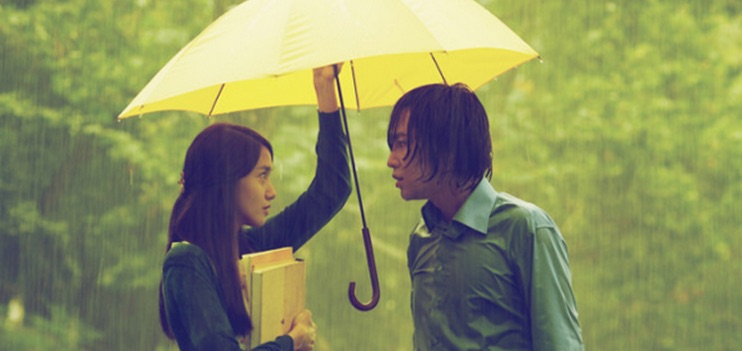
I held my umbrella over someone’s head whilst the drizzle fell earlier today.
Random.
Kind, I thought.
Appreciated.
So give it a go. Don’t wait for the official day, do something randomly kind now. Get a shot of warmth. Hormonally dose up on your oxytocin.
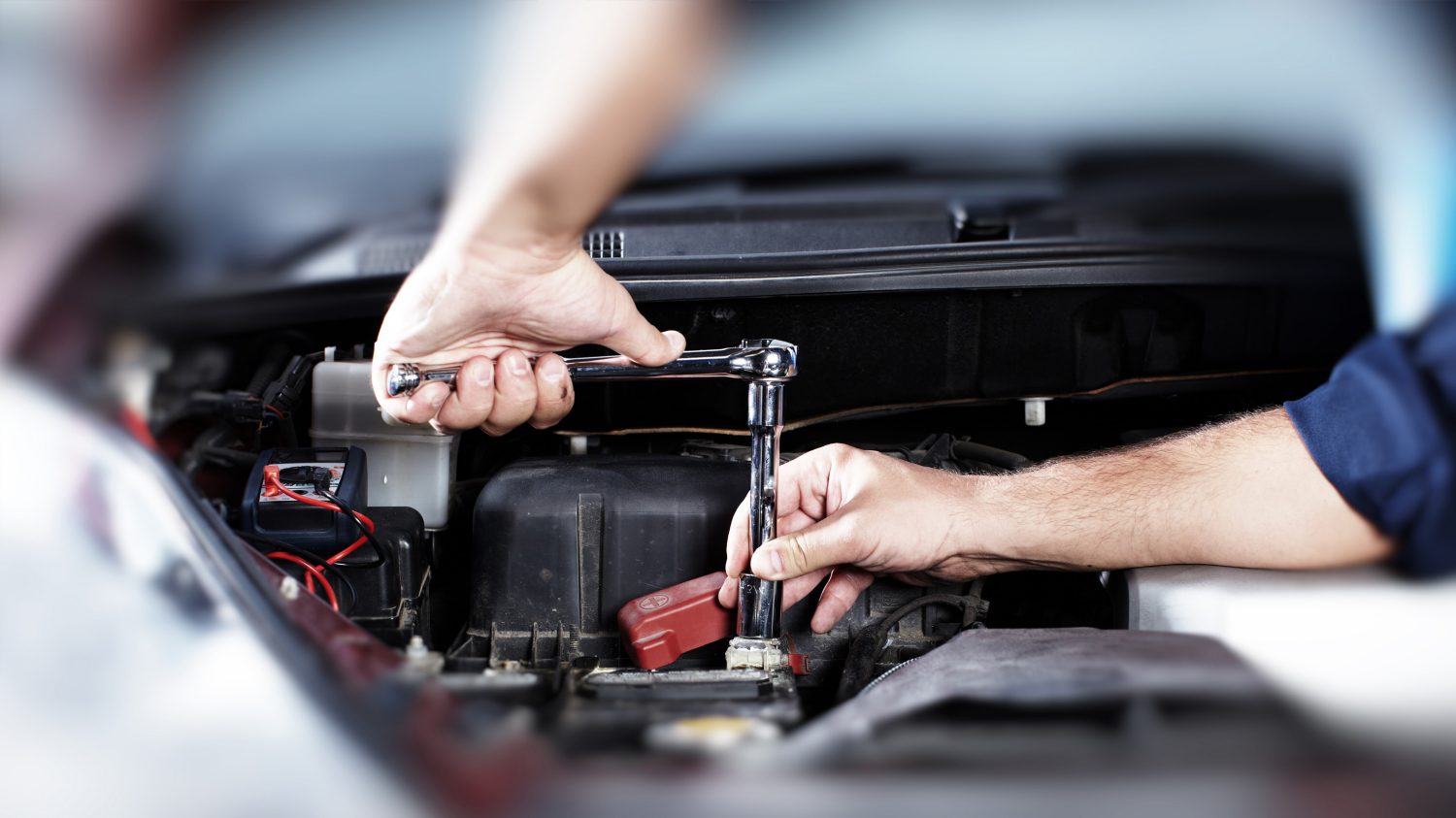
If my car stops working, I take it to a dealer or garage and say please fix this. Generally that works. In part, that’s because the car is one of many identical models. It has a specification. The mechanics are trained and no doubt have detailed on line manuals describing how every part works as well as knowledge of the steps required to breathe life back into those parts that don’t.
We all possess many ‘things’. If they stop functioning to our needs we fix them, or we replace them.
We are so used to this, we somehow seek to apply the same laws of our materialistic consumerist world to our very humanity.
But here’s the thing…
Human beings are inordinately more complicated and each one is stunningly and beautifully unique. No manual. No like for like replacements.
To hope that all of your learning, life experience and behavioural pattern making since birth, can somehow be re-modelled in a few simple steps … a bit like reprogramming the central heating timer … is curious.
And yet we do.
I often get asked in coaching sessions a question a bit like this one … “So how do I change that?”
It’s almost as if we believe we’ve just missed out on a chapter in the ‘How to be a happy human being’ book. Or perhaps misinterpreted some instruction along the living highway which explained how we were supposed to be. Or maybe that we think someone else messed it up for us, so now we have become aware we can just change course, tweak something, switch out one part for a new one. Whatever our thinking about how we came to be like this, we seem to think this ‘expert’ in front of us, this ‘human mechanic’, can somehow put us right.
Changing ourselves is hard work. Rewarding, but always hard work.
And as we set out on that journey, we would do well to remember that we are unique. To value that uniqueness. To seek to enhance and grow what is, not discard it as broken or not good enough.

Ring the bells that still can ring
Forget your perfect offering
There is a crack in everything
That is how the light gets inLeonard Cohen
We only see, because light enters our eyes.
Light illuminates everything.
Yet so often we try and keep light out. If we aren’t perfect, we attempt to conceal our weaknesses, our failings. Our judgement of self means we often wrap up our gifts, our truth, our own light. All sealed up like a neatly wrapped Christmas gift, with tape on every edge. Our gifts wrapped safe, but hidden from view.
We do this, not just in our work, our projects, our outputs, our external offerings to the world. So too with parts of our internal self, our humanity. We attempt to neatly package away our mistakes, our unwelcome behaviours, our memories, our judgements, our fears and our dreams.
Often we wrap them badly. So that despite our efforts, when shaken, the contents leak out.
Still we persist, as if boxing them neatly away is the best thing. The safe option. Yet as the lyric suggests, we simply give ourselves fewer bells. Our melody is simplified. Our music reduced to a few chords or notes. We are less.
Maybe we should embrace the cracks? Enjoy the light? Peek in through the partly open corner, remove a small piece of tape and see what the dim light illuminates?
Seek to play our tune with all of our musicality?
Percussion adding brightness to woodwind,
strings showing dexterity to booming brass,
baritone adding depth to our tenor?

I was struck the other day by two meanings for the word judgement.
In a meeting we were lamenting the loss of a capability to make judgement calls. The ability to hold uncertainty. How rules, laws, policies etc have made us over sensitive to getting it wrong. What’s the ‘right way?’ we ask. Our risk averse nature in an essentially critical world would seem to make the art of judgement a difficult tool to handle.
In a separate conversation we were discussing the dangers of judgement. The judgement we all make about other people and about ourselves. The way, in an increasingly diverse and inclusive world, we still jump to conclusions about people and equally get stuck in our own patterns of judgement about ourselves.
Wanting greater judgement, yet at the same time challenging its use.
I looked to the dictionary. The relevant definitions are “the ability to make considered decisions or come to sensible conclusions” or “an opinion or conclusion”
Perhaps that’s the point? One misses the ‘considered’ or ‘sensible’. Jumping to an opinion or conclusion without considering alternative perspectives, without seeking to explode well worn patterns and subjectivity?
Judging ourselves and judging others casts a shadow over our lives.
It strikes me, we need to get better at this, as human beings.

My tube train stopped today at Edgware Road. The driver informed us that we would be held there for a while. There was a problem with the train in front.
It got me thinking. If a train becomes completely immovable, what happens then? The tunnel, the only route forward, is blocked. I guess we would all decamp and be forced to exit the platform, leave the station and find another way to our destination. Or I guess we could wait. Wait for life, for someone else to remove the blockage so that we can continue on our chosen path.
It struck me that in the event that this happened, we would just cope. Sure we might moan that we’ll be late, gripe about the cost of tickets and the poor service, worry that we don’t know how to get to our destination, but we would find a way. We would move on. Yet in life we often get stuck and stay stuck. Unable to see another path, we become disabled.
Of course London Underground would probably have staff available. Advice would be on hand. Guidance about how to get to our destination. Failing that, we would simply surface and surf. The Internet would tell us what to do.
Life isn’t like that. Even if people are around to listen or to give advice, our life situation is more complex, more individual, more unique, than the tube journey. The Internet doesn’t offer solutions to complicated life problems, riddled with feelings, entwined with complexities of relationship, weighed down with challenges of expectation, paralysed with the fear of coming up short in some way.
As fellow human beings, we seem hopelessly ill equipped to support each other, even if we were minded to.
Maybe this is the Internet we really need?
 illuminated dandelion