are you Marmite?

marmite

Marmite – you either love it or hate it

Possibly true with Marmite, and certainly used to good effect in promoting the brand. It’s a memorable slogan or catch phrase that reflects a certain reality and so it is easy to connect with – you do actually either love it or hate it typically.

Many brands have such slogans.  I recall Persil ‘washes whiter than white’. Not sure if that is technically possible, but, to coin another ‘it does what it says on the tin’.

I was pondering the other day – do I have a slogan, a brand catchphrase I might use?

All of the above might apply to a person too – you either love me or hate me; I’m whiter than white; I do what it says on the tin…

So, maybe you’re ‘finger lickin’ good’?
Maybe you ‘Just do it’?
Maybe you ‘think different’?
Maybe you ‘snap, crackle and pop’?

What might your advertising slogan be and what might it say about you? What aspect of your very essence, your soul would be captured by a phrase used to sell you?

Marmite question maybe?

Photo: Daily Mail


how do you introduce yourself?

i-am

If you’re asked to introduce yourself, how do you begin?

Maybe with your name?  “Hello I’m Steve.”

Our name is the most natural representation of our identity. Since our earliest years it has defined us. Differentiated us from siblings, classmates, friends.

But how do you proceed then? After your name?

Maybe with your job role, or where you come from, or some details about your partner or family? What follows your name is probably context sensitive, but in many situations, when encouraged to say a little more, we might provide all of these details.

But does this describe who you are?

We seem more comfortable to offer up what we do, our employment, career, profession, job title, hobbies. We offer up where we come from, who else is in our lives, maybe our age… in other words our context.

Why do we find it more difficult to describe who we are as a human being?

I wonder if it is in part because that is more personal, more exposing, riskier? Maybe we are embarrassed to reveal our innermost selves? Possibly. But I wonder if it is more because many of us have been given little opportunity to explore and understand who we are?

What drives and motivates you? What do you value highly? What words, actions, behaviours give you a good feeling, and which have the opposite effect? What gifts do you possess? What do you believe to be true about the world, about your place in it – those unwritten rules that determine how you are judged, valued, belong? What excites you in life? What will your legacy to the world be?

Maybe it’s time to start understanding yourself?
Then you can introduce yourself.
Then people can truly meet you.
And you them.

karaoke you

image

Singing someone else’s song is fun… but it’s not your song.

In life, when you stand up to the microphone…

Sing your own song.
Find your own words.
Hum your own tune.
Strum your own beat.
Make your own rhythm.
Voice your own story.
Connect with the hearts, minds and emotions of others through your own lyrics.

Don’t sing a karaoke version of someone else’s life.

Sing yours.

what is your psychological contract of self?

psychological_contract self
Psychological contracts are often referred to in the context of the employer and the employee – what is the expectation, commitment of both?

It sometimes explores qualities of trust, honesty, respect, fairness, compassion. It will often cover the visible expectations and agreements, such as pay, hours, work, training, but more usefully might look under the waterline, beneath the visible iceberg, so to speak. Here might be give and take, inputs and outputs, responsibilities and rewards which are less clearly in play. Concepts such as control, power, innovation, recognition, commitment, respect, loyalty, tolerance and much much more.

At a meeting the other day we were discussing psychological contracts. We were to be a team, so the question posed was, ‘How did we want to be with each other?’

We were to discuss what we were looking for from other members of the team, what we were seeking from the team leader and what we would bring to the team. What our commitments would be in terms of contribution and what we were seeking in return.

As I reflected, I wondered how I could even begin to answer this, as my thoughts and feelings were initially directed inwards, at me. I wondered what my psychological contract with myself was?

Did I respect myself? Did I have compassion for myself? Did I have faith in myself? Was I in control of myself? Did I fully trust myself? Did I appreciate my own being? Did I own my own power?

What are my perceptions of myself, what do I believe about myself?

How am I getting in my own way, either unaware of, or maybe breaking, my own psychological contract even before I entered the room. Surely this is where I should start before considering any team working agreements?

What is my psychological contract of self?

making sense or making meaning?

making meaning making sense
Is there a difference for you between making sense of something and making meaning?

For me, making sense is largely, though not completely, a cognitive process. It’s one that facilitates understanding. It is how I comprehend things in the world around me.

So, if I look at the picture above, I might deduce that this is a teddy bear, that this teddy bear looks soft. He is brown. I know that teddy bears are toys, that often children have them. I might make sense of this teddy bear as a child’s teddy bear. A bear that has been posed to cover his eyes. Equally I might understand that teddy bears can be adult gifts to reflect tenderness, affection, love. I might be curious about the teddy bear’s size, because I know bears come in many sizes, and without background in the picture to contextualise and offer perspective I have to surmise whether it is small or large.

Making sense in this way is how we exchange and gather knowledge about our world, how things work, how to use them, their purpose.

Meaning making and seeking meaning however are inherently human processes at the heart of our humanity. Making meaning facilitates significance. It bonds us to our purpose and sense of self and creates a richer, deeper connection than simply understanding, or making sense. It highlights patterns to aid with new learning, new connections and systemic thinking. It stirs our emotions. It connects us to our experience, our memories, our values, our personal story. In short, it makes us human.

So, for me, the bear picture might remind me of my own teddy bears from my childhood. I might connect to the memories of my own children and their lives now as young adults, way beyond the teddy bear years. I might notice the teddy bear makes me sad and I might recall other times I have been sad. It might equally remind me of happy times. It might remind me that I too sometimes hide. Or that I like a hug. It may bring back memories of parents, of childhood games, of key events in my human story.

In this way meaning making is important. It connects our world experiences, our interactions to people, to activities and to things with our own sense of self. It connects us to our memories, and to our personal story through a deeper somatic awareness. It is more impactful, but also more useful, in that it enables us to form both new and tangential connections, which offer new learning, new meaning and new possible futures.

I can be taught to understand the world around me, to make sense of it, but making meaning of it is a very personal experience.

Maybe it’s the same for you?

banging the tribal drum…

tribal belonging
You may have read about the Twitter wager between two airlines over the result of the Rugby World Cup this weekend.

Quantas and Air New Zealand have suggested each other that the losers change the colour scheme of their planes, but now seem to have settled on the idea that Quantas pilots will wear All Black jerseys if the Kiwis win and Air New Zealand pilots will announce Australia’s victory on their aircraft.

It’s a bit of banter. A bit of fun.

But tribal belonging is deeply in our psyche as human beings.

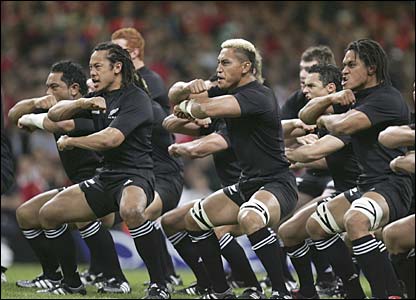
It appears in our sport of course, supporters partisan to their team, chants such as the haka to intimidate the opposition, colours and songs to mark our tribal belonging. It appears also in organisations; departments and divisions having a sense of identity and creating competitive tensions. Members of merged organisations still secretly belonging to their original tribe, sometimes overtly. It happens in families and our language reinforces it with phrases such as ‘Beryl’s side of the family’, or in church at a wedding, sitting on the side of the bride or groom. Our family of birth is often our strongest tribal connection. Tribes appear in music tastes too – think Mods and Rockers. Even in such matters as car ownership – the MG drivers club etc. We wear uniforms, shirts, badges, fly flags, sing songs all to reflect the tribe we belong to.

There is a tension here of course. The up side is the sense of belonging that the tribe creates. The potential downside the sense of conflict and competition it engenders.

We need to belong. Our tribal belonging is an indication of who we are.

if you don’t know, how do you know?

pass the parcel self awareness
I’m a convert to the notion of self awareness.

I have seen evidence and experienced personally the value of knowing who you are, knowing why you’re here, knowing what matters to you, what consciously and unconsciously drives your behaviour. I have seen people liberated through discovering and working on a limiting belief. I have seen people find peace, happiness, fulfilment through understanding their purpose and finding a way to congruence with it.

But I’m lucky. I had the opportunity to discover this, in others and for myself. Self awareness is a bit like a pass the parcel game; each layer you rip off reveals a new gift, a new sense of excitement, a new possibility and a sense of knowing that you are a step closer to a bigger prize within.

But what if you don’t know? What if you aren’t in the circle of the pass the parcel game? What if you aren’t aware of the party even existing?

How do you know how to start? How to be curious about yourself? How do you move on from the philosophy of that’s just how it is, my lot is my lot, some just get a bum deal. How do you even know that behaviour is purposeful, that it can be changed? How do you know that purpose, identity, values and beliefs exist and drive how you are, who you are, what is possible for you?

if you don’t know, how do you know?

what’s in a name?

will i am name identity
Someone I know is a teacher. She teaches in a primary school.

It’s a tough job, but with huge rewards.

The other day she told me about a child in her class. She had noticed he was unable to spell his own name. There were different versions, but mostly incorrect.

Initially surprised at this basic lack she decided to address it. So, after a few weeks allowing him to settle in class and building a relationship of trust, she took the boy aside for twenty minutes at lunchtime one day. They worked step by step, using phonics, using visual recognition, building the letter patterns for the little boy. With practice, time and again he wrote his name correctly.

He left with a huge grin.

Throughout the remainder of the week he was found writing his name everywhere. Inside the front of his book, on the white board, on scraps of paper in snatched moments between the activities of the lesson.

What a gift! The gift of giving this youngster a tangible connection with who he is. His identity. The joy unbounded.

What’s in a name?

Everything, if it’s part of who you are.

the archaeology of you

archaeology of self
What do you think of when I say archaeologist or archaeology?

My first thought is about old things, history, origins.

When I think about the archaeologist I imagine someone, dusty and dirty, on their knees, gently sweeping away at a half buried treasure, using a small hand brush and miniature tools. Occasionally they lean down to gently blow the sand or soil away; the sand or soil that has safely encased and protected the artifact for many many years, centuries even. I also imagine someone piecing together the exposed parts, rebuilding tiny fragments into a more complete whole, something that tells a story.

The art is one of care, of delicate, tender, loving practice. History is treated with the utmost respect.  The finds not treasures of intrinsic monetary worth necessarily, but often priceless in the story they reveal of humanity and community and living long since passed.

It strikes me how this applies to us and our very human being.

Our story, our reality, our truth, our purpose comprised of many small parts formed long ago in our personal history, often buried, safely locked away beneath the surface. If we embark on a journey of self exploration, either for ourselves, or as a coach say in support of another’s quest, the need for that same delicate care, that same respect for what is, that same patience to gently reveal the treasures, would seem paramount.

Just as with the dig and the unearthed pot, often revealing the parts of our human self and then assembling them can reveal something most precious – our layers of significance, our identity, our reason for being, our purpose.

If you seek to explore the archaeology of you, go slowly, blow gently.


our stories of self

once upon a time
We have a story for ourselves.  Sometimes more than one. Sometimes the story we tell, is not the story we live in.

This was beautifully expressed to me recently when a coach colleague shared this experience

A coach I met recently shared a fascinating story with me about a client they were working with and some profound learning they had experienced.

By their third session, the coach noticed how hard they were finding it to connect with the client and find the truth in the stories the client was sharing. They had a growing sense that the client was not being authentic. The coach noticed how this was affecting their own flow in the sessions.

After this third session, the coach spent much time reflecting on why they felt so uneasy about the situation and admitted to themselves that something just wasn’t right.  Maybe they just weren’t good enough as a coach to support this client?

The coach decided to share their unease with their client at the next session. Whilst waiting for the client to arrive, the coach convinced themselves that the client might be better off with a more experienced coach as the coach clearly had now developed some bias that would get in the way.

The coach gently approached the subject with the client and said “I’m truly sorry, but I have to admit I am struggling to connect with you and more importantly I find myself doubting whether you bring real events in your stories or ones you imagine yourself having”……this last part changed everything !

The client shared how they had imagined when they were younger, that their life would be so very different from what it was now. It transpired the client was mourning the life they had hoped they would have and the person they believed they would become. Their unconscious grief for this representation of self, resulted in the invention of a new reality in which the client remained the same age, the same values and the same personal goals they had had 25 years ago.

This realisation had a profound affect on the coach and resulted in transformation for the client.

This story is both a brilliant reminder of what we do as coaches and at the same time a sobering reminder of the complexity of our humanity.

As coaches our gift to our clients is to support them navigating their personal truth in search of something more whole, more true, more fulfilling – the story is heartwarming in that regard.

Yet the story also serves to show how ‘wierdly’ our very humanness can work for us.

Our brains and bodies can take us on strange journeys, through thought and feeling patterns, to strange places. In this case, for this client, from clarity of vision for self, to grief for an unfulfilled, imagined self, to the creation of a false self, with all its stories, false realities and ties that bind that client to a life less than their potential.

It shows also the power of our stories of self.  The story we imagine for ourselves, the story we exist in, and the story of what we might be.

Stop being who you were or who you could have been… instead, be kind to yourself and be who you are.