would you hire Archie?

Hierarchy

Think of four people you know. Friends, work colleagues, neighbours.

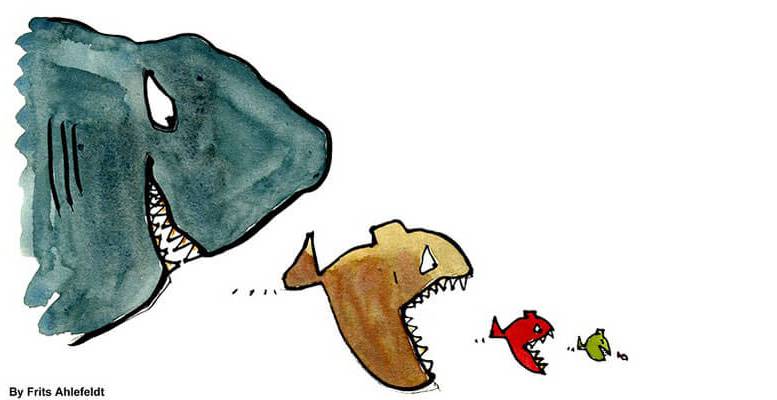
Now, including yourself, place these five people in a hierarchy. Who is top, who is bottom? What is the sequence? Who is above whom and what criteria are you consciously or unconsciously choosing as you create your list?

If the other people were to create a list, would it be the same or different? Where would they put you on the list? How much does that matter to you?

What if you were now to share the five lists with each other? The lists you and the other four people had compiled. Could you? How easy would that be? How comfortable? Would you be seek to justify your choices? Would you want to explain? Would you be honest? Would people expect there to be a reason, a logic? Would you be focused on how people were placing you in their hierarchy? How might your relationships be impacted by this exercise and revealing your view, your hierarchy?

We are naturally hierarchical. We compete. We try to get ahead. We judge success, we judge our position in the community, in society through hierarchies. It may be house, car, qualifications, money, job, pay grade, job title, grades our kids get at school, social ladder, societal groups we belong to, the universities our kids go to…

In most organisations there is a discrete hierarchy. An organisation chart. A boss, a team. Leaders and the led. Managers and the managed.  Pay, rewards, benefits, maybe where your office is, or the door you enter by, the technology you get given, or where you can eat? These are all symbols of the hierarchy.

Yet how easy would it be to create that hierarchy amongst friends, colleagues, neighbours, when they knew you had created it?

Strange that we live by criteria, structures and frameworks we find hard to own. Difficult to be honest about. Struggle to take responsibility for. There is both comfort and discomfort with hierarchies. Yet they are seemingly in our human psyche. A need to know where we stand in the group and a fear of what that might mean and the judgement that comes with that.

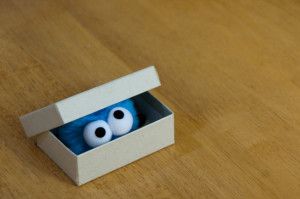
So would you “hire Archie”?  Could you?
the mischievous monster in your head

image

Roald Dahl’ first children’s book was The Gremlins.

The term gremlin refers to an imaginary mischievous sprite lurking in the electrics. World War II pilots coined the phrase when their engines, mechanics or electronics developed unexpected faults. In Dahl’s book, written in the 1940s, the gremlins’ motivation for sabotaging aircraft is revenge for the destruction of their forest home, which was razed to make way for an aircraft factory.

As human beings, neurons in our brains fire electrical impulses. This is how we think.

Often however, we have glitches in our own electrics; our thinking engines. For many of us, annoying little programmes have infiltrated our thinking process. This unwanted code, this inner voice, runs despite our wishes. The inner voice becomes a habit. It becomes something we routinely tell ourselves, in our heads. This self talk sabotages us. Derails us. Causes us to detour or to crash land. Often these little subroutines of code take the form of “I can’t…”, “I shouldn’t…”, “If only…”, “I’m not good enough to….”. They are self judgements and limiting beliefs.

The familiar friends of these little inner voices, the ones who speak up most regularly, become our gremlins. Mischievous little sprites lurking in our thinking.

In Roald Dahl’s book, the gremlins are persuaded to change their habits and are retrained to repair aircraft rather than sabotage them.

Maybe we need a gremlin retraining school?


the mystery of trust

panama-485x302

Recent media frenzy about well known people and their financial affairs seems to carry with it a cloak of significance way beyond a few thousand pounds of tax liability.  This isn’t really about David Cameron’s tax return or Gianni Infantino’s true knowledge, this is about a deeper, more intangible thing.  A thing which carries great weight, even though we can’t see it, hear it or touch it … trust.

Trust in our institutions has been declining.  The Edelman Trust Barometer evidences this. Trust in government, organisations, leaders has in some cases recovered recently after years of decline.  Buy, as the Dutch say…

Trust arrives on foot but leaves on horseback

Hard to win, easy to lose.

Yet in much of our lives we show huge trust. We happily buy on the internet from organisations we know little about, who often have no physical presence. Sometimes we make those choices based on ratings from other consumers, who we’ve never met, will never know, without awareness for their context… yet we trust their reviews. We book rooms on AirBNB. Rooms in people’s houses. Happy to stay with a complete stranger often on the basis of a few positive comments from previous guests. All on the face of it, significant leaps of faith and dripping in this thing called trust.

In some contexts it’s so important. We like to be trusted and to show trust. Sometimes trust is so easy to gain, yet often easy to lose, and hard to re-gain.

We seek it like an elixir.
We value and covet it like gold.
It unlocks so much, like a magic key.
And we can feel so incensed, so emotive, when we feel trust has been betrayed or lost.

Strange that something so hard to define, so intangible, is so real?

denuding me

image

Much in our lives is seemingly over engineered.

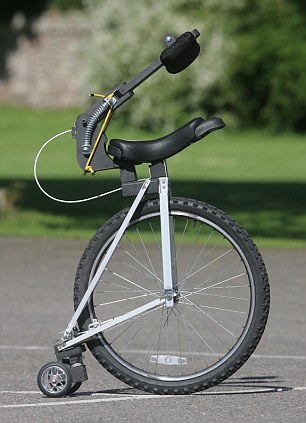
This is the ‘Velofeet’, a unicycle with stabilisers that the rider sits astride and walks. Yes, a sitting walking device.

I have a new electric toothbrush which throbs to tell me when to move to another part of my mouth and has a light which flashes should I press too hard. There are forks that do something similar if you eat too much, too quickly!

I saw an article the other week about a toilet that is internet enabled, so that you can raise or lower the seat using an app on your phone before you arrive at the bathroom.

There’s a ‘smart mug’ with a sophisticated temperature and light system to tell you whether your drink is still warm or is too hot to drink.

Don’t get me wrong, technology is a remarkable thing. I still marvel at the ‘magic’ that is… my microwave oven.

But this kind of technology led innovation, trumping any consumer led need is a growing phenomenon. Over engineering products, because we can.

It denudes us of our human reflection, thinking, judgement and decision making.

My toothbrush makes me lazy. It stops me thinking. I start to rely on the light and the throb, rather than thinking about what I’m doing. Personally, I’ve had this issue with SatNav for a while. I stop noticing. I become blind to my route, landmarks, orientations, distances. I stop seeing what is around me and instead become a slave to a voice, or a picture, telling me to turn now. The result being I have no learning. I don’t learn how to get somewhere, I just learn to rely on the technology.

This stripping away of the natural use of our senses, diluting our reading of the signs, removing our need to think, taking control of our judgement and decision making, denying us learning, is impacting our interaction with each other too.

Bit by bit we become less human.


when enough isn’t enough

image

Information is important. Not having enough, troublesome. Too much?

I once saw an advertisement hoarding at a football match. It named the company and its business then proclaimed ‘find us in the local newspaper’. Now why it wasn’t possible to provide a telephone number or a web address I don’t know, but insufficient information, I suspect earned them little business.

The wall in this supermarket entrance explains to me the meaning of the word ‘reusable’. As a result, I find myself reluctant to shop there. ‘Reusable’ is enough. I judge them for their need to patronise me.

I photographed this image below recently. It made me laugh.

image

It was interesting to me that the addition of the tick and cross, the marking of my effort in effect, was the thing that rankled. Equally it gave me no room for alternative, equally erroneous, parking positions or angles. One right, one wrong.

Sometimes enough is a very personal thing. And enough isn’t always enough, especially when it’s too much.

Notice what is missing and what tips you into too much. This is about you, about me, not about the information.


drawing life’s curtains

Have you ever noticed that dusk brings a particular behaviour for a short period?

During the day, we exist in our offices or our houses, with curtains wide open, blinds pulled up, shutters flung back. The light inside and outside in balance somehow, we seem open to the notion that people might look in, might see us. And that’s ok. There’s a form of equilibrium. Equality of visibility in this balanced light.

Then dusk arrives. We turn on lights inside our homes and offices. But we leave curtains and blinds wide open. The result is the light is stronger inside than outside and people can see in. See us more clearly. We are silhouetted in the artificial lights. More visible. More exposed. So people look, sometimes stare.

Then we draw the curtains, drop the blinds, turn the light off maybe. In essence we hide. Perhaps too exposed now, we retreat, away from prying eyes. And so it stays, until dawn, when we throw open the window ‘shields’ and allow natural light to flood in, safe in the knowledge that we can be seen again, but not clearly seen, not highlighted, not in the spotlight.

And so the pattern repeats.

Maybe it’s like that in life?

Happy to be seen when we blend in, when the light of others equates to our own light? Maybe though when we are in the spotlight, highlighted, more visible, we seek to hide? We set out to draw a veil over ourselves, to become more private, more introverted? We quite literally pull down the shutters.

Instead.
Shine your light.
Hold lightly the sight of others in the soft light.


the isolation of difference

image

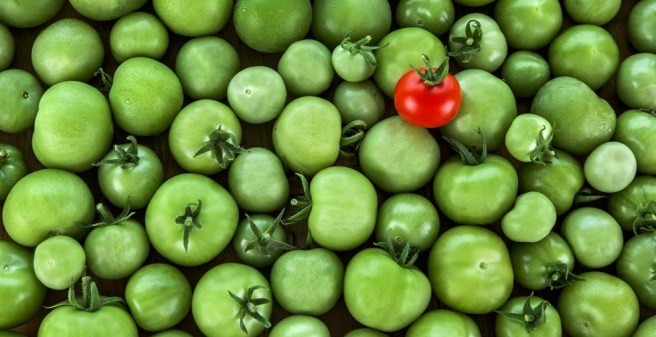
The world, it seems, falls into two camps. The majority and the minority.

We even use the words in every day language. Ethnic minority. Minority groups. The silent majority.

If you are in the majority, you get to call the shots. You get to determine right and wrong, to label the minority, to make decisions on behalf of all.

If you are in the minority, you get to feel different, labelled publicly, isolated and badged as ‘the minority’.

I have recently been exploring what are termed neuro diverse conditions – dyslexia, dyspraxia, Aspergers and the like. Neuro diversity is a term coined by those not in these groups. Those same people refer to themselves as neuro typical. Typical meaning simply the majority in this case.

This same phenomenon exists whether your ‘diversity’ is sexual, physical, ethic, religious. If you are in the minority, you can feel labelled and judged by the majority.

One result of this majority minority tension is that many of us seek to be in the majority, to conform, for acceptance. Here is the power. The power of majority. Or we hide, for fear of judgement and rejection. Here is the isolation. The isolation of minority.

Yet every one of us, by some definition, will be in both a majority or a minority. So let’s stop all this nonsense.


the hidden art of hiding

hiding dyslexia
In recent months I have spoken to a number of people with dyslexia.

One common aspect of our conversations has intrigued me. The tension that is created between a need for some support, balanced with a desire not to be marked out as different. I want some help, but I don’t want to be seen to want help.

Those I have spoken to have talked of their shame. A sense that in some way they are inadequate. Unable to do things that others find straightforward. Many hide their dyslexia for this reason. Preferring to find their own coping mechanisms. Choosing roles and work where the challenges arising from their dyslexia aren’t exposed.

Whilst my dyslexic confidants have shared their fear of judgement, their desire to hide their ‘condition’, they have also shared heart wrenching stories of the efforts required to cope. To stay afloat. Many are desperate for some simple supports.

The reality here of course is that these dyslexic individuals have other strengths, other capabilities which are more developed and stronger than their non-dyslexic colleagues. Just as with any human being, we are all different. All unique.

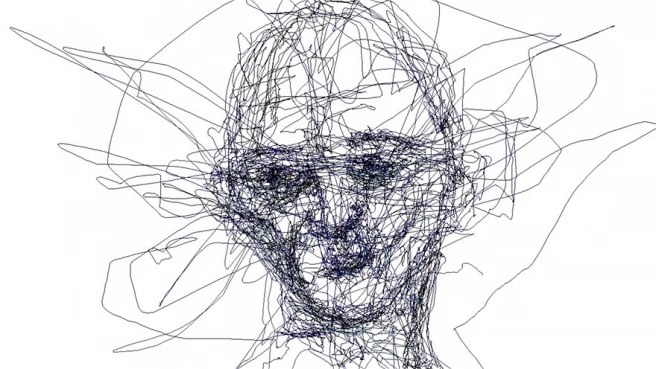
We all hide too.

Sometimes we hide a part of ourselves from those around us. Often we hide a part of ourselves from ourselves. Yet we think that the hiding is hidden.

Honesty and truth seldom bring blame, judgement, criticism. When they do, it is those criticising, judging, blaming who are the individuals who are really hiding. Hiding behind judgement, criticism and blame.

We need to come out of the shadows.
To learn to be, in all our unique glory.
To stop hiding.

image by: Sally Green