signalling endings, signalling beginnings

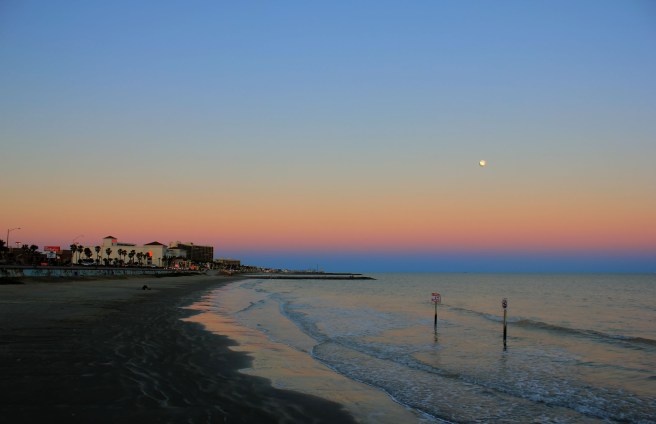
dusk

Dusk is here.

It’s a strange time. The transition between day and night.

Day and night are clearly marked in our routine of existence.  Each of us associates certain activities with day and night – everything has a place in one or both. Day is when we get up, for example, as many of us work in the day.  Some of us though work at night, so day is when we sleep and everything is reversed.

Dusk is different though.  I can’t think of something I associate with dusk.

It seems solely to exist to mark the transition from day to night.  The fading light a reminder that day is ending and night is beginning.

Signalling endings. Signalling beginnings.

Maybe there is a place for this signalling elsewhere in our lives?
Maybe then change wouldn’t be so scary?
Maybe the signalling could be seen as a celebration of a new beginning?
The celebration of a time passing and a chance to enjoy what that time gave?

Maybe every transition and change programme needs dusk?


meta to the meta

image

Meta tags appear on web pages. They aren’t visible to the reader, they contain data describing the page. Data on the data, if you will. ‘Meta’ can also be described as a concept which is itself an abstraction from another concept.

Going ‘meta’ to a situation can also be a self referential place; stepping outside of oneself to observe oneself.

An example might be to ask “What do I think about my thinking?” Or perhaps to explore, “How do you reflect on those reflections about that?”

Sometimes, creating a different physical perspective can help still further. Try this out…

Sit and think about a problem or issue you are currently grappling with. Notice what you’re thinking and feeling as you explore this difficulty.

Now, get up and stand across the room, looking at the original chair or place you were just in. Here you are no longer thinking about the original problem, instead you are considering the thinking about the problem.

Ask yourself “What do I notice about that thinking?”  Ask yourself “What do I think and feel about that thinking and what do I hear in that thinking?”

Notice what comes to mind. Perhaps you think the thinking was a little negative or judgemental? Maybe you notice uncertainty or confusion? Maybe you notice more than one perspective in the thinking – like an internal dialogue? Notice whatever comes to mind?

Now, stand in a third place; another part of the room, still further from the original chair. This time look at the place where you were standing a few moments ago; the second, reflective place. From this new third place, ask yourself “what do I notice, what do I think, how do I feel about that thinking in that place?” The thinking about the thinking, if you will.

Here you may find new insights. New meaning. New significance. New awareness on the original issue… as you go meta to the meta.


when enough isn’t enough

image

Information is important. Not having enough, troublesome. Too much?

I once saw an advertisement hoarding at a football match. It named the company and its business then proclaimed ‘find us in the local newspaper’. Now why it wasn’t possible to provide a telephone number or a web address I don’t know, but insufficient information, I suspect earned them little business.

The wall in this supermarket entrance explains to me the meaning of the word ‘reusable’. As a result, I find myself reluctant to shop there. ‘Reusable’ is enough. I judge them for their need to patronise me.

I photographed this image below recently. It made me laugh.

image

It was interesting to me that the addition of the tick and cross, the marking of my effort in effect, was the thing that rankled. Equally it gave me no room for alternative, equally erroneous, parking positions or angles. One right, one wrong.

Sometimes enough is a very personal thing. And enough isn’t always enough, especially when it’s too much.

Notice what is missing and what tips you into too much. This is about you, about me, not about the information.


beauty on the roof

IMG_2116

This morning, the ice on the roof of my car looked like this.

Incredible that a little water, the right temperature and ambient conditions can produce such complex intricacy, yet delicate beauty.

I am exploring personal learning and growth currently, and working with an agricultural metaphor – plant a seed, provide the right conditions and nurture growth. Is this the way for people to learn and grow?

If such beauty on the roof can be created in nature with such simplicity, there has to be something here, surely?

rain gain

whenitrains

The best thing one can do when it’s raining, is to let it rain

Henry Wadsworth Longfellow

Sometimes in life we can try too hard.
Too hard to influence and control the things we simply cannot.
Sometimes this blinds us to what we can do.

Don’t seek to stop the rain.
Instead, seek to master the umbrella.
Instead, seek to enjoy the sounds and feelings associated with a great storm.
Instead, marvel at nature’s power.

Focus on what you can do.

image from a YouTube clip by Acerting Art

when we would do well to be the beach

What is is

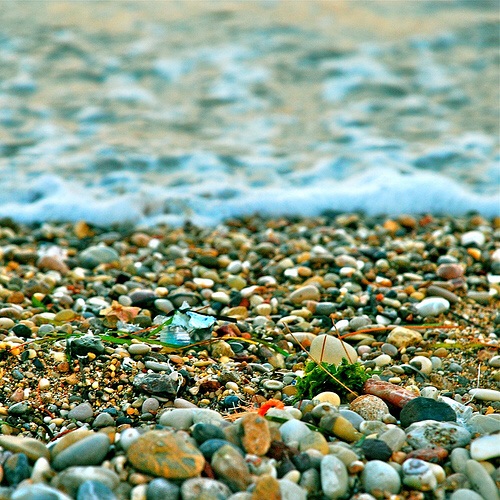
When you go to the beach, you walk on the pebbles. You see some pebbles are rounded, polished, worn smooth in the rub of nature. You see some are sharp, jagged, fractured in the storm of collision. Some pebbles carry history in fossilised form. Some are small. Some large. Some brown. Some grey. Some multicoloured. And you observe this and you allow it.

When you go to the beach, you see the sea. Water crashes in foam, surging for freedom. Water retreats in liquid fellowship. Foams, retreats, foams, retreats, foams, retreats in enduring rhythm. And you see this and you understand. And you accept the way that it is.

And in all of this, you don’t get emotional about it. You appreciate the beach. The pebbles. The sea.

What is, is.

But when you meet other human beings, you lose all that.
You say “he’s too this” and “I’m too that”.
You say “if only she wasn’t…” and “I should be…”.
You say “They are different” and “I am not enough”.

Judgement comes in.

Maybe we should see people as the sea and the pebbles, and appreciate them as they are.

What is, is.

Inspired by Ram Dass


facing ourselves is the hardest direction to look

not looking at ourselves
It seems like we stand in the centre of the world.  In the centre of our world.

From this place we can observe all. See sights. See situations. See people. Be drawn towards. Turn away. Fit.

From our vantage point, with our map of the world as the world should be, we can assess everything, place a value on it, judge it. We can rank things, place them in hierarchies of choice, want, need. We can compare this external vista of things, people and their actions with our perception of right and wrong, good and bad.

And we do…

We critique the behaviour, choices, necessities of others. We glance at the unsightly homeless person from the corner of our eye, thereby maintaining a dignified separation. We wince at the teenager’s language and lack of respect in the street, like we skipped that life stage. We place the drunk man in a story, a story of our own creation, so that we can explain his ‘condition’. We assess the parents and their actions towards their screaming toddler, like frustration, tiredness, learning are all experiences we have never had or at least have always handled better. We gossip about the neighbour and the affair we think they’re having, so that we can stay in the ‘moral’ club through our action of placing them in the ‘immoral’ one. We whisper with colleagues about the boss who seems oblivious to the impact of their actions, because there is safety in collusion. We mutter about the Sunday driver who meanders when we’re in a hurry to be somewhere, like they have no intent or purpose.

That person is good, this one less so. We’re OK, because they’re not. How can he do that? Why is she so…? Why don’t they…? I wouldn’t do that. Who wears that? Does she know what she looks like? Really … pink? Why doesn’t he wash his hair? Another holiday!? Why can’t she just say? He’s a waster. She doesn’t realise what she’s doing to him. Amazing, awful, not good enough, disgraceful, shameful, good heavens…

We all do it, every day.  It comes easy. Too easy.

Maybe because in our map of the world, our view of right and wrong, of good and bad, we can be exonerated? We are innocent. Never guilty. We are successful. Never a failure. We are ethically and morally just. Never wicked.

But maybe facing ourselves is merely the hardest direction to look?


Our monochrome contradictions

contradictions
Foreign policy is a balancing act. Lines are never clear. Neatly drawn. It’s a grey world rather than a monochrome extreme one.

Reading recently about the struggles in the Middle East highlights this clearly. Alliances between unlikely bedfellows; either battling against IS, resisting Iran’s regional dominance, seeking to create new states, or to destroy existing ones. Lines drawn between old enemies, new enemies, enemies for a reason, enemies for a season, enemies for a lifetime. Nation states trying to balance their contradictions. Not able to totally support one cause, because of complex overlapping interests in other causes.

It reminds me of our own human struggles. Our internal contradictions of self. That sense that a part of us wants something whilst another part wants something else, something contrary. That experience of being a certain way at times, then being a very different way, in a different place or time.

We have contradictions.

We are muted monochrome shade, rarely black, rarely white.

In my coaching work I sometimes encourage clients to explore their contradictions. The edges of themselves. I, for example, would describe myself as an “extrovert loner”. Sometimes gregarious, social, with a view to express. Sometimes seeking to be alone, silent. I need both parts. My ‘foreign policy’ needs to play both hands.

Naming these seemingly opposite, contrary, elements of self allows us to honour them, respect them, work with them all. I encourage an “I am… ” construct. I often find the choice of sequence my clients make is revealing. Usually the first part of the contradiction describes how they are, the second, who they are. Here are some examples…

I am an open secret
I am a tidy mess
I am hopelessly hopeful
I am an enthusiastic couch potato
I am an away from futurist
I am a responsible rebel
I am a leading follower
I am an unplanned achiever
I am an independent team player
I am deliberately informal
I am a selfish altruist

Foreign policy is laced with politics and self interest. But perhaps so are our parts?  Just like the politicians we are trying to balance multiple interests. Just like the politicians we don’t reveal our full hand, even to ourselves. Just like the politicians, that ‘mishonesty’ can bite us.

The question is, do we need to go to war? Does that serve us?

Be curious about your contradictions. Explore what each part seeks and offers you. Recognise their intent for you. Embrace them all.


we like to be seen, but from a distance

see me
How many people do you know?

How many of those do you see, really see?
How many do you allow to really see you?

I’m not talking about visiting, or noticing your new top or knowing how you take your coffee, I’m referring to a deep empathy, a real connection, a knowing so profound it is almost as if they are you, or you are them.

I use the term ‘see’ as a collective here. For some, the term ‘see’ will work. Experiment with alternatives for yourself. How many people really hear you? How many utterly feel you? How many truly get you? How many wholly understand you? How many do all of those things?

It seems we have a deep desire to be seen, to be understood, to be heard. We need to be acknowledged in a human way. Yet to be acknowledged in that total way, can be so desperately intimate.

Intimacy of that sort scares us.

Sometimes the person who gets that close sees more of us than we can see for ourselves.

So we employ tactics to keep ourselves safe, sometimes conscious tactics, but much more often, we employ tactics out of our conscious awareness. Games if you like. Games with ourselves and with those around us. We tease. Here’s a little bit of me, come closer if you dare, come closer if you care. If they do, we often push them away again. That way, we can tell ourselves they don’t really care, or we can shield our vulnerability. If we are the one being being invited in, sometimes that intimacy is too scary too, so we deflect, we joke, we talk about us, we change the subject.

When the invitation is extended, often subtly, often in a fleeting moment, often out of conscious choice … all it takes is to be present. To stand in the moment. If they attempt a game-play or to move away, gently and respectfully, hold them in that moment. Witness their truth. Rather than turn away in a kind of counter game-play, say “I see you (and you’re OK)”, not aloud, but through your presence, your very being. Hold them, carefully, whilst they witness their own truth.

That’s acknowledgement.
That’s seeing them.
That’s deeply human.

when did you last see someone, really see them?

“Some people put walls up, not to keep people out, but to see who cares enough to knock them down”

Socrates

So, care.
Reach out.
Be curious.
Notice someone today. Really notice.
See them. Really see them.
You might be surprised.
They might see you too.
We all want to connect.
To be seen, for who we really are.