actors on our own stage

image

I was talking with a coach today as their supervisor. They were speaking about procrastination – about something they wanted to get done but recognised they were avoiding.

As they spoke about moving forward, their hand made a shoving motion from in front of their face to their right. I was curious. They then spoke about avoiding this thing because they didn’t like advertising themselves and their talents. With this explanation they made a ‘jazz hands’ gesture with hands framing their face.

I stopped them talking and asked them to notice what just happened. They smiled and reflected back these movements that accompanied their words. They had noticed that their own gestures said as much or more about their stuckness as the story does. Our conversation took a new direction.

Sometimes I wonder just how helpful to our condition of ‘being’ if might be, if we were able to watch ourselves as actors on our own stage?


working as a pear

image

When I was at school, I studied Latin. Only for a year as, despite getting an A in end of year tests, I was deemed a scientist. I therefore got to study Physics, Chemistry and Biology as separate subjects. French was my ‘permitted’ language.

Now, with the benefit of some life experience, I realise all these choices, mine or those made by the academic system, were all somewhat pointless. I haven’t really used any of this knowledge to any great degree.

The other day I was designing some training with a colleague. We were creating a storyboard with post it notes. She wrote ‘work as a pear’ on one. Instantly her face crumpled and tears of mirth welled in her eyes as she chortled over this ridiculous concept and silly spelling faux pas (French eh?). I began to snigger too. We enjoyed the moment. Together.

I wish at school I had been offered the subject ‘learning to laugh at myself’. This skill would have been much more useful. The ability to laugh at our mistakes. To laugh at our occasional ridiculousness. Hold our slip ups lightly. Know that everyone is human. Simply lighten the day with laughter and a smile. These are useful skills. De-stressing. Providing context. Perspective. Building togetherness, teamwork. Embracing human frailty. Knowing that we are all fallible yet all amazing.  Feeling good about yourself. Letting others see you, without fear. Building connection.

I recommend laughing at yourself several times each day. It’s good for the soul.

I use it more than any chemistry, physics, biology, Latin or French.


are you Marmite?

marmite

Marmite – you either love it or hate it

Possibly true with Marmite, and certainly used to good effect in promoting the brand. It’s a memorable slogan or catch phrase that reflects a certain reality and so it is easy to connect with – you do actually either love it or hate it typically.

Many brands have such slogans.  I recall Persil ‘washes whiter than white’. Not sure if that is technically possible, but, to coin another ‘it does what it says on the tin’.

I was pondering the other day – do I have a slogan, a brand catchphrase I might use?

All of the above might apply to a person too – you either love me or hate me; I’m whiter than white; I do what it says on the tin…

So, maybe you’re ‘finger lickin’ good’?
Maybe you ‘Just do it’?
Maybe you ‘think different’?
Maybe you ‘snap, crackle and pop’?

What might your advertising slogan be and what might it say about you? What aspect of your very essence, your soul would be captured by a phrase used to sell you?

Marmite question maybe?

Photo: Daily Mail


when a mask might reveal, not conceal…

image

I had the pleasure of attending The Lab recently, where in the midst of some great experiments into being human, we explored working with masks.

If you have seen the excellent ventriloquist comedian Nina Conti you will know part of her act involves applying a partial mask to an audience member. Nina then controls the mouth parts with a remote,  so that the individual seems to be agreeing to do something outrageous, or says something inappropriate, even though their body language suggests horror, or disagreement, at the prospect.

It is a clever representation of the power of a mask. The act demonstrates a freedom and what can be possible if we don’t feel seen, whilst juxtaposing the obvious visibility of the individual’s body squirming at what they are saying, through Nina. Simultaneously, the act allows Nina, as the ventriloquist, to say and do things she might never do herself.

In our Lab experiment we saw people assuming the whole character, mannerisms, language, opinions of their ‘character behind the mask’.

A mask, in a sense, gives us permission to be someone else. To reveal a part of ourselves we may normally keep subdued or hidden. It also gives us permission to conceal ourselves behind the mask. Be it gender, ethnicity, geographic origin. We sometimes use non-visual masks too. Hiding behind our organisational or societal status or role.

I wonder what we are capable of if we could wear a mask at will?

What truth would we be able to speak?
What feeling could we emote?
How much more ourselves we might be?
How much might we conceal?


how do you introduce yourself?

i-am

If you’re asked to introduce yourself, how do you begin?

Maybe with your name?  “Hello I’m Steve.”

Our name is the most natural representation of our identity. Since our earliest years it has defined us. Differentiated us from siblings, classmates, friends.

But how do you proceed then? After your name?

Maybe with your job role, or where you come from, or some details about your partner or family? What follows your name is probably context sensitive, but in many situations, when encouraged to say a little more, we might provide all of these details.

But does this describe who you are?

We seem more comfortable to offer up what we do, our employment, career, profession, job title, hobbies. We offer up where we come from, who else is in our lives, maybe our age… in other words our context.

Why do we find it more difficult to describe who we are as a human being?

I wonder if it is in part because that is more personal, more exposing, riskier? Maybe we are embarrassed to reveal our innermost selves? Possibly. But I wonder if it is more because many of us have been given little opportunity to explore and understand who we are?

What drives and motivates you? What do you value highly? What words, actions, behaviours give you a good feeling, and which have the opposite effect? What gifts do you possess? What do you believe to be true about the world, about your place in it – those unwritten rules that determine how you are judged, valued, belong? What excites you in life? What will your legacy to the world be?

Maybe it’s time to start understanding yourself?
Then you can introduce yourself.
Then people can truly meet you.
And you them.

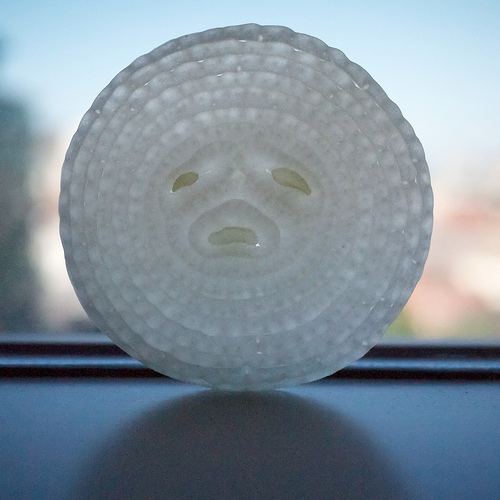
do onions really smell?

image

“Ogres are like onions.”

In the movie Shrek, the ogre is walking with Donkey through a field. Shrek is trying to describe his complexity. “Ogres have layers” he continues. Donkey doesn’t get it and wonders if Ogres are like cakes, because they have layers too and more people like cake. It’s an amusing, but deeply human moment. The analogy of a simple vegetable revealing real human depth, in an ogre. But as in many of today’s great children’s animations, there are messages, metaphors, analogies for the adults.

And… we are all like onions.

Layers of complexity. People we meet will see the outer layer. Those who look deeper may see what lies in the next layer down, or even the one beneath. If we pay attention to people and really take the time to notice, we can all see layers of their complexity and a depth of ‘human being’ in those we meet. We can never see it all though – even in those we are closest to.

We, in turn, may let friends, and those close to us in. Sometimes sufficiently to see the three, four, five layers beneath the outer layers, but there may be a core we don’t let anyone in to see. We may not even know ourselves what lies at the heart of our humanity, our self, our soul. What we are really made of, capable of.

Experiences can reveal our own layers to us. Sometimes difficult experiences, moments of conflict, moments of pain, moments of personal challenge. These can reveal deeper truths to us, but only if we take the time to notice. Only if we are resourceful enough in the moment to learn. And often we are not.

We need to be curious about ourselves, take time to notice, be compassionate with ourselves, learn to reflect, give ourselves time. And we need to recognise the times when we are avoiding the difficult learning, by telling ourselves that well trodden story we have always told ourselves. We need to look for our true truth. Learn to learn. About ourselves.

An onion flavours our cooking.

Your layers flavour you.