the problem with the junior doctor debate…

prejudice map truth NLP
I listened this morning on the radio to a debate about the proposed changes to junior doctors contracts and pay.

First the minister, Jeremy Hunt, spoke about the intention, what was proposed and why it was needed. Then a junior doctor spoke about concerns, what they perceive is really going on and what was needed.

I don’t know the truth. I don’t know much about the health service. I don’t know what is reality today. I don’t know what will address any concerns and make the future better. I don’t know who is right, who is wrong or indeed if either are.

Yet I noticed my own prejudice appearing. Firstly, politicians aren’t to be trusted, are they? Whereas surely I can trust a doctor? Then, the doctor described how they would lose a third of their income, yet weren’t currently working longer hours than legislation required … “Really? Aren’t you exaggerating for effect?” I thought. Then after each quoted statistics about weekend deaths, different of course, I noticed my mistrust of statistics emerging – “you can make any number say whatever you want”. There was talk of strike action, which fired up my dislike of the concept of unions, who purport to protect workers yet often operate out of lavish premises funded by their members subsidies. And so it continued…

I can’t get to the truth.

Not just because each party is portraying their version of the truth in the media to their own ends, but because, even if that weren’t so, my own prejudice prevents me from seeing and knowing what is. From being clean. From knowing the truth.

How often do we blind ourselves to truth? Whether that be unconscious bias in diversity, judgement based on looks, preconceived boxes we put people, roles, attitudes into? Beliefs about the world which make our map of its workings uniquely distorted to us?

I don’t know what the right thing to do is in the junior doctor debate and I can’t influence an outcome. But I now know more about how much I prevent myself from accessing that awareness, accessing a truth.

I can do something about that.

trick or treat?

trick or treat memory
Tonight is All Hallows’ Evening, or Halloween.

To most it signifies dressing up, makeup, trick or treat. Probably pumpkins, with cut outs illuminated by candle, casting an eerie visage? Maybe a party, maybe a bonfire and fireworks?

I wonder how many revellers realise that many believe it is a night to remember the dead? Those martyrs, saints and believers who have passed on. Lighting candles is thought to attract their souls.

Of course, as with much that is ritualistic and ancient, there are other theories too. We simply cannot be sure.

We don’t need religious or historic events though to carry with us to the present day a misnomer or false interpretation of reality. Many of us do it with our own memories … and we were actually there when they happened!

Often a childhood memory lives with us. But often it is distorted, mis-remembered. It carries the understanding of the child. Parts of the actual occurrence are deleted, parts twisted to fit our childhood emotional need, parts simply forgotten in the story. Yet we run this edited inaccurate story throughout our adult lives. It holds us, trapped in a mythical past, caught in a story of fiction and we behave today as if it were true. We carry the remnants of the experience in the form of a broken relationship or a belief about ourselves that no longer serves. It was probably never true, but we made it so, and now we have run it as a video, or heard it as a story in our heads, so many times that we hold it to be a reality. It now controls us. Limits us. Makes us smaller.

Maybe we would be well served to honour it as dead? Just like the souls Halloween remembers? Maybe we would be well served to think of it as a myth, a fable, a misinterpreted story of long ago? Maybe we should move on and pay more attention to now?

Treat yourself, don’t trick yourself.

Look after your soul, not that of a long dead memory.

when silence is the most perfect form of speaking

silence time to think listen
Nancy Kline’s book ‘Time to Think’ advocates a model of human interaction that honours the individual’s time to think.

In our society we are expected to have an opinion, and to voice that opinion. To disagree or to agree with your perspective. Our language, our organisational culture, our very democracy is imbued with debate, dialogue, challenge. The great debates are forefront in the news and on social media… The USA right to guns or not? Is removing tax credits unethical? Can the Labour party survive its leadership choice? Will Jose get the sack at Chelsea? We are encouraged to debate them, to have a perspective, even to take a side.

At a coaching supervision group discussion today we were talking about silence. One coach spoke of the sheer joy of not having to hold a view in their coaching work. The freedom and release that gave them. As a coach we can be objective. Focus merely on the client’s story, their way of being. We don’t need a view as to the rights and wrongs of that. We don’t need a view as to the way forward, the solution for the client.

We can just be present. Listen at the deepest level. Give them time to think.

Nancy asks “what makes you think the question you are about to ask is more valuable than the client’s next thought?”

I wonder if in organisations, in society, in life we need to learn to be silent more. To honour other people’s time to think and to speak their truth. To not hold a view, but just to accept what is true for them. To intervene solely with the purpose of helping them to develop their thinking. Not for our understanding, not to share our opinion, not to demonstrate our value giving contribution of solution … but just to help them to develop their thinking.

Maybe there would be more understanding, more compassion, more truth?

we come to the world in two ways

two world views
On the one hand, we experience the world as a kind of predictable system. We seek to gather data and knowledge so that we might better understand the world. Science, maths, economics and other such disciplines, attempt to use this way of engaging with our world to bring clarity, definition, understanding to the structure of this system. Over perhaps millennia, this approach to engaging with our world, and the knowledge we gain from that, has given us the technologies and advances we often take for granted; medicines, transport, food production, computers, drugs etc.

The key posture, when we approach the world as an empirical system, is that of objectivity; the ability to investigate the world without letting our own prior prejudices, opinions or beliefs cloud the discovery. Neutrality, detachedness are what are required. Evaluation.

On the other hand, we also experience the world as a kind of community, a network of connection. As a community, we find ourselves members of the family, group, team, organisation, country etc. This community has other members. We are all participant members of the human community. We see things from within the community, from a certain committed, somewhat bias, perspective. This posture involves us knowing things, such as whether we belong, whether our partner loves us. We do this, not by putting them in test tubes and analysing them as a scientist might do, but through a kind of knowing, gleaned from feeling, experiencing, sharing, intuition. This kind of knowing is very different from the ‘evaluative’ kind of knowing.

I have just eaten lunch. Eating lunch in a space where many are gathered to dine, you are likely to notice a background hum of chattering human beings. Much of the dialogue will be about weekends, lunch choices, hobbies, work priorities, colleagues and friends use of time, choices, decisions, activities etc. Groups of diners gather in communities.

How much of this chatter is about the ‘science’ of gathering through our senses what appears to be objectively true, and how much is intuited as a means to affirm place, belonging, connection, beliefs, values, who we are?

Both are valuable. Notice how much of your time is spent gathering perceived proven data and how much is spent making meaning and connection.

the truth is…

truth honesty
… we find honesty hard.

We seek it from others. We say we are honest, when challenged. We mostly value it as a good thing in others. A positive trait. Mostly, we try hard to be honest.

But we find real honesty hard.

It means facing ourselves. It means honouring who we are. It means accepting ourselves. Accepting that we are emerging, that we are growing, learning. It means accepting ourselves, for all our qualities and also for all our struggles and blind spots.

Honesty with ourselves allows honesty with others.

who or what is twiddling the dimmer switch?

dim your power
I have been speaking these past two days about giving your power away. How it diminishes you and your potential.

So who or what have you handed control to?

Is it your boss? Or is it your partner, your spouse or your lover? Have you handed it to a parent or a sibling? Does fear have your power? Do you give it to controlling and domineering people? Have you handed it to another part of you? Maybe the ambitious part, maybe the parent in you, maybe to the part of you that fears being great?

Have you given it to comfort foods, alcohol, drugs or other forms of escape? Have you given it to taking care of everyone else? Or to the people you see as more worthy than you? Do you let people who are unhappy drain and suck your energy? Have you given your power away to money or time, the scarcity or lack of it?

Or have you given your power to a social institution such as the government, a religion or a philosophy? Or to someone in authority or a position of power, such as a doctor, a lawyer?

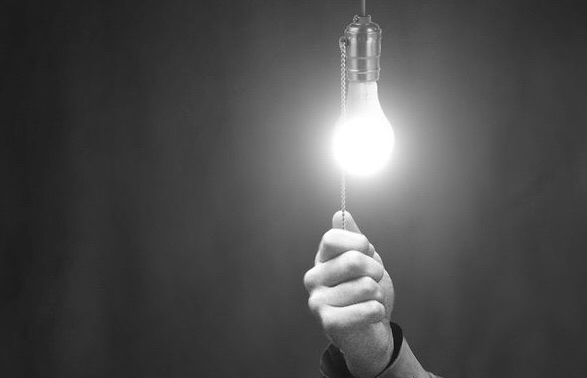
Take back control of your dimmer switch and turn yourself up bright.

leaking power through thought

habits of thought leaking power
I wrote yesterday about giving our power away.

We do this in our patterns of thought too. Our habits of mind can cause our power to leak away. Dissipate. Below is only a partial list of ways you might do this. Study the list. Notice your habits.

Do you spend time, in your head, beating yourself up?
Do you have regular thoughts about being better than…?
Or about not being as good as…?
Do you judge yourself and come up short?
Do you focus on pleasing others?
Do you catastrophise and fear the worst before it’s happened?
Do you regret old failures or lost opportunities?
Do you replay old hurts or difficult conversations in your head?
Is it a pattern of thought to be bitter about circumstance and to think about how unfair things are?
Do you over focus on enemies or on revenge?
Are your thoughts directed to taking control?

Or maybe you have another pattern of thought?

Your life energy is a resource – you can use it wisely or squander it just like any other resource. Make an estimate of how much of your thought you spend on habitual thinking which gives away your power. Then address it.

when the power is lost, the lights go out

giving power away
A colleague at work has been leading a new project. She has surveyed the territory, read the research, summarised the viewpoints and gathered the core material. It’s time to document our stance and intended direction.

She invited others to share this work, valuing a collective approach. Now a couple of drafts have been produced, attributed to their shared work, but my colleague is disappointed. Disappointed in herself.

I discussed it with her. The work has lost the essence and the inspiration she found through the research, but also, it no longer reflects her.

We explored how she has given her power away.

We can all do this.

We give our power away when we doubt ourselves. When we try to make everyone happy or look for others approval and validation, thereby over-empowering them.
We give our power away when we fail to honour or share our personal truth. We do it when we compare ourselves to others or worry what other people will think. We do it when we forget that we know what we’re doing and that we are good at it. We do it when we have poor boundaries and allow others emotional activity to intimidate us and leak into our world. We do it when we lose sight of what we need or want, instead placing focus on what we see externally in the world as the blocker – lack of money, time, ability, looks, weight…

But giving your power away diminishes you, disables you, casts your personal light in shadow.

the archaeology of you

archaeology of self
What do you think of when I say archaeologist or archaeology?

My first thought is about old things, history, origins.

When I think about the archaeologist I imagine someone, dusty and dirty, on their knees, gently sweeping away at a half buried treasure, using a small hand brush and miniature tools. Occasionally they lean down to gently blow the sand or soil away; the sand or soil that has safely encased and protected the artifact for many many years, centuries even. I also imagine someone piecing together the exposed parts, rebuilding tiny fragments into a more complete whole, something that tells a story.

The art is one of care, of delicate, tender, loving practice. History is treated with the utmost respect.  The finds not treasures of intrinsic monetary worth necessarily, but often priceless in the story they reveal of humanity and community and living long since passed.

It strikes me how this applies to us and our very human being.

Our story, our reality, our truth, our purpose comprised of many small parts formed long ago in our personal history, often buried, safely locked away beneath the surface. If we embark on a journey of self exploration, either for ourselves, or as a coach say in support of another’s quest, the need for that same delicate care, that same respect for what is, that same patience to gently reveal the treasures, would seem paramount.

Just as with the dig and the unearthed pot, often revealing the parts of our human self and then assembling them can reveal something most precious – our layers of significance, our identity, our reason for being, our purpose.

If you seek to explore the archaeology of you, go slowly, blow gently.