denuding me

image

Much in our lives is seemingly over engineered.

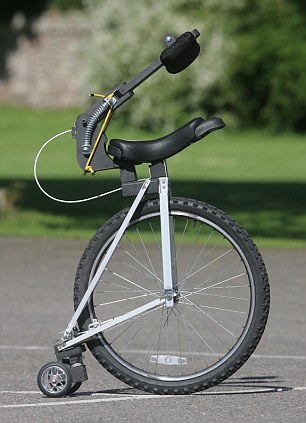
This is the ‘Velofeet’, a unicycle with stabilisers that the rider sits astride and walks. Yes, a sitting walking device.

I have a new electric toothbrush which throbs to tell me when to move to another part of my mouth and has a light which flashes should I press too hard. There are forks that do something similar if you eat too much, too quickly!

I saw an article the other week about a toilet that is internet enabled, so that you can raise or lower the seat using an app on your phone before you arrive at the bathroom.

There’s a ‘smart mug’ with a sophisticated temperature and light system to tell you whether your drink is still warm or is too hot to drink.

Don’t get me wrong, technology is a remarkable thing. I still marvel at the ‘magic’ that is… my microwave oven.

But this kind of technology led innovation, trumping any consumer led need is a growing phenomenon. Over engineering products, because we can.

It denudes us of our human reflection, thinking, judgement and decision making.

My toothbrush makes me lazy. It stops me thinking. I start to rely on the light and the throb, rather than thinking about what I’m doing. Personally, I’ve had this issue with SatNav for a while. I stop noticing. I become blind to my route, landmarks, orientations, distances. I stop seeing what is around me and instead become a slave to a voice, or a picture, telling me to turn now. The result being I have no learning. I don’t learn how to get somewhere, I just learn to rely on the technology.

This stripping away of the natural use of our senses, diluting our reading of the signs, removing our need to think, taking control of our judgement and decision making, denying us learning, is impacting our interaction with each other too.

Bit by bit we become less human.


when the conditions are right…

image

Flowers are amazing.

As Spring approaches and the first flowers of the season are out, it’s hard not to wonder at their sophistication.

They reach up and face the sun in an attempt to maximise their potential. They become open, literally, to possibilities. When night draws in and growth is no longer fed by the nourishing sunlight, they close and bow their heads, patiently waiting for the next surge of life expanding light and warmth.

They are hugely diverse, bright, colourful in a range of sizes. All are welcome in the garden.

We could learn so much.


meta to the meta

image

Meta tags appear on web pages. They aren’t visible to the reader, they contain data describing the page. Data on the data, if you will. ‘Meta’ can also be described as a concept which is itself an abstraction from another concept.

Going ‘meta’ to a situation can also be a self referential place; stepping outside of oneself to observe oneself.

An example might be to ask “What do I think about my thinking?” Or perhaps to explore, “How do you reflect on those reflections about that?”

Sometimes, creating a different physical perspective can help still further. Try this out…

Sit and think about a problem or issue you are currently grappling with. Notice what you’re thinking and feeling as you explore this difficulty.

Now, get up and stand across the room, looking at the original chair or place you were just in. Here you are no longer thinking about the original problem, instead you are considering the thinking about the problem.

Ask yourself “What do I notice about that thinking?”  Ask yourself “What do I think and feel about that thinking and what do I hear in that thinking?”

Notice what comes to mind. Perhaps you think the thinking was a little negative or judgemental? Maybe you notice uncertainty or confusion? Maybe you notice more than one perspective in the thinking – like an internal dialogue? Notice whatever comes to mind?

Now, stand in a third place; another part of the room, still further from the original chair. This time look at the place where you were standing a few moments ago; the second, reflective place. From this new third place, ask yourself “what do I notice, what do I think, how do I feel about that thinking in that place?” The thinking about the thinking, if you will.

Here you may find new insights. New meaning. New significance. New awareness on the original issue… as you go meta to the meta.


beauty on the roof

IMG_2116

This morning, the ice on the roof of my car looked like this.

Incredible that a little water, the right temperature and ambient conditions can produce such complex intricacy, yet delicate beauty.

I am exploring personal learning and growth currently, and working with an agricultural metaphor – plant a seed, provide the right conditions and nurture growth. Is this the way for people to learn and grow?

If such beauty on the roof can be created in nature with such simplicity, there has to be something here, surely?

working as a pear

image

When I was at school, I studied Latin. Only for a year as, despite getting an A in end of year tests, I was deemed a scientist. I therefore got to study Physics, Chemistry and Biology as separate subjects. French was my ‘permitted’ language.

Now, with the benefit of some life experience, I realise all these choices, mine or those made by the academic system, were all somewhat pointless. I haven’t really used any of this knowledge to any great degree.

The other day I was designing some training with a colleague. We were creating a storyboard with post it notes. She wrote ‘work as a pear’ on one. Instantly her face crumpled and tears of mirth welled in her eyes as she chortled over this ridiculous concept and silly spelling faux pas (French eh?). I began to snigger too. We enjoyed the moment. Together.

I wish at school I had been offered the subject ‘learning to laugh at myself’. This skill would have been much more useful. The ability to laugh at our mistakes. To laugh at our occasional ridiculousness. Hold our slip ups lightly. Know that everyone is human. Simply lighten the day with laughter and a smile. These are useful skills. De-stressing. Providing context. Perspective. Building togetherness, teamwork. Embracing human frailty. Knowing that we are all fallible yet all amazing.  Feeling good about yourself. Letting others see you, without fear. Building connection.

I recommend laughing at yourself several times each day. It’s good for the soul.

I use it more than any chemistry, physics, biology, Latin or French.


why why?

Germany's Irina Mikitenko runs on her way to winning the women's London Marathon in London

The question ‘Why?’ is one we are familiar with.

We use it to seek understanding, context, reasons.

But an alternative viewpoint might be that it is the most unhelpful question.

‘Why?’ encourages us to repeat the story we have always told ourselves and told others. To tell ourselves, and others, the same untruth. To give ourselves and others permission, justification. That justification in effect a cloak. A cloak to deeper understanding, to enquiry, to learning, to change.

‘Why?’ becomes an (unintended) excuse.  ‘Why?’ effectively keeps us running on the same track; because we tell ourselves why we always have, why we are now, and why we always need to.

So maybe stop providing yourself and others with the excuse.  Ask instead ‘what?’, ‘when?’, ‘how?’, ‘where?’.  These questions explore specifics, they explore truth, they facilitate growth and movement.  They illuminate choice and perspective, instead of justification to remain stuck.

how do you know about pass the parcel?

image

I wonder sometimes if life is like a game of pass the parcel?

The music starts. Life runs.

The parcel moves around the circle.

In the party game, the parcel moves from child to child. In life though, maybe we are handing off one life moment to the next life moment? Passing our life to ourselves, experience by experience? That same self sitting next to us in the circle, about to live our next life episode?

In the game, the music stops. The anticipation of a gift, palpable. The joy of revealing it, effervescent. The pleasure of tasting the ‘sweetie’ within, satisfying. Feeling like you’ve won. Our child eagerly tears off the wrapper. Desperate to discover what lies within.

In the game of life, as an adult, we are however too keen to move on to the next scene, the next task, the next phase. We essentially restart the music immediately. No time to reflect on our personal learning. No time to even notice if we had any learning. No curiosity about the ‘sweetie’; that insight into ourselves. Move on. Pass the parcel of life to your adjacent, same self.

If we viewed life as a game of pass the parcel, where we stopped the music and enjoyed the self learning, the insight into how we’re growing as a human being, who we are, who we are becoming, where we’re going; how much richer would we be?

What if you don’t know about pass the parcel? What if you have never explored yourself, how you tick, how you come to the world, how you are evolving, your gifts, why you are here…? What if you just pass the parcel of life on to your same self neighbour? What if the music keeps playing?

Start now.
Play the game.
Tear open the gifts.
Learn to learn.
Learn to grow.

The game never ends.
The learning never stops.
Until the music does.

let’s see what the pain looks like

synaesthesia

Someone once uttered those words to me.

‘Let’s see what the pain looks like’.

The context was around an organisational change. I remember at the time being momentarily confused. Don’t you feel pain? I don’t know what it looks like, any more than I can taste it or hear it.

On reflection I realised it was an interesting insight to the speaker’s inner world. I regretted the missed opportunity of exploring with them what pain looked like for them. Did it have a colour? A hue? Was it a picture, a particular image, a personal memory? Was it sharp, blurred? Was it a still image, a movie? Was it 2D or 3D?

Beyond the curiosity about their representation, I wondered what had led them to see, rather than feel, pain. Was it that feeling it made it too real? Was it a defence mechanism, to stay a little removed and observe the pain rather than taking it into the body? Was it safer? Were other feelings also seen? Did they feel anything and, if so, what was ‘feelable’ and what wasn’t?

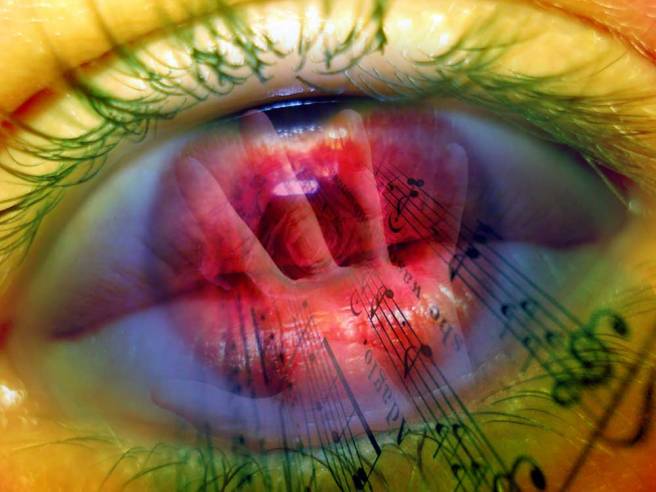
Was this only related to pain and other feelings or did they ‘see’ everything? Could they see smells or see tastes too? Did they see freshly mown grass when the smell wafted into their nostrils? Did they see musical notes as they listened or played? Did they have other synaesthesia, such as hearing smells, tasting sounds or smelling images?

A missed opportunity, but one that still serves as a learning, one that stays with me as a curiosity about the uniqueness of our human experience.


what do you know and how do you know it?

knowing NLP filters truth map
Do you know what you know because you read it? Maybe in a text book, an academic study, a newspaper report, on-line in a blog or on social media?

Do you know what you know because someone told you it was true?

These are both verbal exchanges. Auditory. They are spoken, written, heard or read. Stories if you will. The exchange of knowledge through written or spoken communication. Someone else provides their knowing and we hear or read it and accept it as knowledge we will also hold to be true. It is, in a sense, second or third hand knowledge. Knowing we agree to add to our own knowing. Or not.

Our acceptance of this knowing involves an unseen process of convincing. Maybe I accept it because I trust the author. Maybe I trust the method by which their knowledge was acquired? Maybe I trust the method of conveying the knowledge to me?

Do you know what you know because that’s the widely accepted truth?

It’s the word of the society, culture, religion, community, organisation… the word of the system if you will. In a sense, story, tale, myth, evidence become fact, truth, reality through the weight or volume of saying it. If enough people speak something, it tends to absorb a validity or truth amongst others. This is how customs and culture are formed.

Maybe I am convinced of this knowing because I have heard it many times from different sources within the system? Maybe I accept it because doing so affirms my belonging to the group? Maybe the groups I belong to therefore narrow my ability to know?

Do you know what you know because you have assembled a truth, through collecting, filing, connecting new data, new knowing, into your own existing knowing?

I know for example that many people see images in their heads. I know this because I have read about it, I have heard about it in training sessions, I have experienced it through coaching many people who can vividly describe the videos or stills in their mind’s eye, I have personally seen pictures in my own head. I have experimented with this knowing to extend, broaden, widen and deepen it. I have purposefully sought out additional knowing, making sense, making patterns and making new neural connections to create an enriched personal knowing.

Maybe I readily accept this knowing? Convinced because it fits with other knowing I already have?

Maybe what I know already, informs what I seek to know? I am, in a sense, blind to new knowing because my existing knowledge guides and channels me to seek knowing which corroborates knowing I already have.

Do you know what you know because you have experienced it and therefore know it to be true? Do you know what you know because you have seen it? Seen it with your own eyes? Tasted it with your own tongue?

I have tried coriander, and I know I don’t like the taste. I have in a sense created my own personal knowing. Others may also have this knowing; but a hundred, or a thousand people not liking coriander doesn’t make coriander something nobody eats, a poisonous food. We are happy to create our own version of knowing, a personal truth.

In fact through all of these methods, we create our own version of truth, our own subset of knowing.

Whether our knowing comes from historic sages, from trusted texts, from reliable friends, from assembled self knowing, from tasted, smelled or observed personal experience, our knowing comes through a hidden process of filtering, selection and trust which makes our knowing personally true. Often this process makes others’ knowing false as a result. That’s how arguments, wars start.

We should be curious about our own personal process of knowing.

How we know what we know. Our hidden process of validation and acceptance. Our process of exploring knowing to expand and develop it. Learning, if you will. This matters, because if our personal process is flawed, broken in some way; if we are blind to certain pieces of knowing, closed to experiencing certain knowing or inexperienced in different ways of assembling knowing… then we are limited.

If we are limited, we are not fulfilling our human potential.

… and that’s worth knowing.

you can’t have pizza without pizza

pizza self awareness change
These were the words I heard this morning.

I laughed at first, but then, on reflection, realised the logic was irrefutable.

My wife was explaining a need to go to the shop, to buy pizza, so that we could have pizza for tea. The sequence of the thinking intrigued me.

It seemed to highlight the significance of setting a goal and that once the goal is in place, the steps, the resources, the requirements to fulfil that goal can follow. They become almost inevitable. The goal is pizza, pizza is required, pizza comes from the shop.

So, if you can’t have pizza without pizza, maybe…

You can’t change without changing?
You can’t move without moving?
You can’t learn without learning?
You can’t grow without growing?
You can’t see without seeing?
You can’t feel without feeling?
You can’t be without being?

Of course, these action words necessitate a self awareness – a knowledge of both the intended goal. the current state and a means of connecting them. What is learning for me? What is it I want to change? What am I feeling and what do I want to feel? What am I moving towards and how do I create movement for me? Who am I, who is the person I’m seeking to be?

It is true you can’t have pizza without pizza, but knowing what pizza you want will certainly deliver a more satisfying meal.